East Asia: Economic Powerhouses, Geopolitical Tensions, and Regional Realignments
Introduction
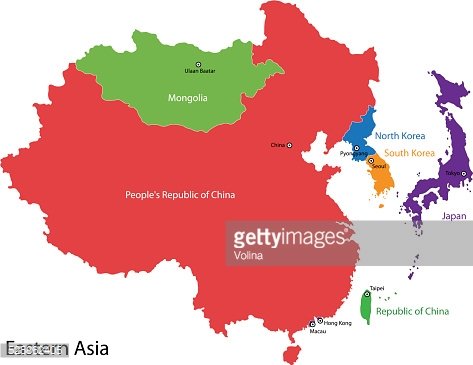
East Asia is a region marked by powerful economies, deep historical ties, and some of the world’s most intense geopolitical rivalries. Home to economic giants like China, Japan, and South Korea, East Asia drives much of global trade and technological innovation. However, territorial disputes, historical grievances, and the competition for regional influence create significant security challenges. As China seeks to redefine the balance of power, the U.S. and its allies respond with strategic realignments, and regional actors navigate this shifting landscape. This analysis examines the core conflicts, economic trends, and emerging alliances shaping East Asia’s future.
China: Global Ambitions and Domestic Challenges
Conflict Overview:
China’s rise as a global power is reshaping East Asia. Domestically, China faces challenges including economic slowdown, a declining population, and growing demands for social services. Internationally, its assertive policies in the South China Sea, Taiwan Strait, and border regions spark concerns among neighbors and the U.S., fueling competition and strategic mistrust.
Current Dynamics:
China’s Belt and Road Initiative (BRI) continues to extend Beijing’s influence, while its military modernization program is rapidly advancing, with significant investments in the navy, air force, and missile capabilities. President Xi Jinping’s third term suggests a continuity of assertive foreign policies, with a focus on “rejuvenation” by reunifying Taiwan with the mainland, which he has signaled as non-negotiable.
Key Actors:
- Chinese Communist Party (CCP) and President Xi Jinping
- People’s Liberation Army (PLA)
- United States and regional partners, such as Japan and Taiwan
Implications:
China’s ambitions impact East Asia’s security and economic landscape, as regional powers adapt to its rise. Should China’s economy slow further, internal pressures could push Beijing to adopt even more nationalist policies, particularly regarding Taiwan and the South China Sea. As China navigates its role as both a regional and global power, the balance it strikes between cooperation and confrontation will define much of East Asia’s future.
Taiwan: A Flashpoint of Great Power Rivalry
Conflict Overview:
Taiwan is one of East Asia’s most volatile flashpoints, with Beijing considering the self-governing island a breakaway province and aiming for eventual reunification. The U.S., while maintaining a “One China” policy, provides Taiwan with defensive support, creating tension in U.S.-China relations and increasing the risk of conflict.
Current Dynamics:
Under President Tsai Ing-wen, Taiwan has bolstered its defenses and sought closer ties with the U.S. and other democracies, particularly Japan and Australia. China’s military exercises around Taiwan have intensified, particularly following high-profile U.S. visits. Meanwhile, Taiwan’s advanced semiconductor industry, essential for global tech supply chains, adds a significant economic dimension to the geopolitical equation.
Key Actors:
- Taiwanese government, led by President Tsai Ing-wen
- U.S. government and military, supporting Taiwan’s defense
- People’s Liberation Army, conducting operations in the Taiwan Strait
Implications:
Taiwan’s strategic importance makes it a critical player in the U.S.-China rivalry, and any misstep could lead to a confrontation with global repercussions. The U.S. Indo-Pacific strategy increasingly focuses on deterrence, but the risk of escalation remains. Taiwan’s future is tied closely to the region’s stability, making diplomatic management essential.
Japan: Balancing Economic Power with Military Resurgence
Conflict Overview:
Japan, one of East Asia’s most developed economies, faces security threats from China and North Korea. While Japan’s pacifist constitution has limited its military capabilities, shifting regional dynamics have driven Japan toward rearmament. Under Prime Minister Fumio Kishida, Japan is expanding its defense budget and capabilities, aligning closely with the U.S. and other allies.
Current Dynamics:
Japan’s new national security strategy emphasizes deterring China and countering North Korean threats. Joint military exercises with the U.S. and other allies underscore Japan’s commitment to regional security. Domestically, Japan faces an aging population and workforce shortages, making economic reform crucial to sustaining its military ambitions and technological leadership.
Key Actors:
- Japanese government and Self-Defense Forces
- U.S.-Japan alliance, providing security guarantees
- Regional partners, such as Australia and South Korea
Implications:
Japan’s rearmament marks a significant shift, potentially transforming East Asia’s security landscape. A stronger Japanese military, backed by the U.S., could deter aggression from China and North Korea. However, it also risks heightening tensions with Beijing, especially regarding disputed territories in the East China Sea.
The Korean Peninsula: Fragile Peace and Nuclear Tensions
Conflict Overview:
The Korean Peninsula remains divided, with North Korea posing a persistent security threat through its nuclear and missile programs. South Korea, a close U.S. ally and major economic power, seeks stability but faces the unpredictable Kim Jong-un regime, which continues to develop and test advanced weapons.
Current Dynamics:
South Korean President Yoon Suk-yeol has taken a firmer stance on North Korea and strengthened military ties with the U.S., including conducting joint military exercises. North Korea, meanwhile, has intensified missile testing and rhetoric, challenging U.S. and South Korean deterrence efforts. China’s support for North Korea complicates international sanctions, limiting diplomatic options.
Key Actors:
- North Korean government, led by Kim Jong-un
- South Korean government, under President Yoon Suk-yeol
- U.S. military, stationed in South Korea and a critical deterrent force
Implications:
The Korean Peninsula remains a focal point of East Asian security concerns. Continued North Korean provocations raise the risk of miscalculation, particularly as U.S. and South Korean forces respond with joint exercises. Long-term peace efforts are unlikely without a fundamental shift in Pyongyang’s stance, making containment the dominant strategy for now.
South Korea: Economic Innovation and Regional Diplomacy
Conflict Overview:
South Korea’s economic success and technological innovation make it a regional powerhouse, but its proximity to North Korea and complex relations with China and Japan create diplomatic challenges. South Korea’s position in the U.S.-China rivalry is delicate, as it relies on both the U.S. for security and China as a top trading partner.
Current Dynamics:
Under President Yoon, South Korea has strengthened its alliance with the U.S., particularly in cybersecurity, military cooperation, and supply chain resilience. However, tensions with Japan over historical grievances occasionally resurface, complicating trilateral cooperation. South Korea’s semiconductor industry is vital to global technology, making it a critical partner for U.S. and Japanese efforts to counter China.
Key Actors:
- South Korean government, balancing U.S.-China relations
- U.S. government, reinforcing military and economic ties with Seoul
- China, South Korea’s largest trading partner
Implications:
South Korea’s strategic choices impact the region’s economic and security architecture. As Seoul deepens ties with Washington and Tokyo, it contributes to a coalition aimed at balancing China. South Korea’s role as an economic and technological leader will be pivotal in East Asia’s future, particularly in areas like semiconductors and digital infrastructure.
Regional Tensions in the South China Sea and East China Sea
Conflict Overview:
Territorial disputes in the South and East China Seas involve China, Japan, the Philippines, Vietnam, and Malaysia, among others. China’s claims and construction of military facilities on disputed islands have intensified tensions, with neighboring countries bolstering their defenses and aligning with the U.S. to counter China’s assertiveness.
Current Dynamics:
The South China Sea remains one of the world’s most contested waterways, with China asserting its claim over nearly 90% of the area. The U.S. conducts “freedom of navigation” operations to challenge China’s claims, while regional countries like the Philippines and Vietnam have sought closer ties with the U.S. and Japan. In the East China Sea, the Senkaku/Diaoyu Islands dispute between China and Japan remains a flashpoint.
Key Actors:
- Chinese government, claiming sovereignty over disputed waters
- U.S. Navy, conducting freedom of navigation operations
- Southeast Asian nations, particularly the Philippines and Vietnam, opposing Chinese claims
Implications:
The South and East China Seas are critical to global trade, and any escalation could disrupt regional stability. The disputes also highlight the strategic importance of regional alliances in countering China’s influence. The U.S. Indo-Pacific strategy increasingly emphasizes maritime security, with implications for both economic stability and military posturing in the region.
The Role of External Powers: The U.S., Quad, and the Indo-Pacific Strategy
The United States has reinforced its commitment to East Asia through its Indo-Pacific Strategy, which emphasizes alliances with Japan, South Korea, and the Philippines, as well as cooperation with India and Australia through the Quad. The U.S. aims to counterbalance China’s rise by strengthening military partnerships, securing supply chains, and promoting democratic values. Japan, Australia, and India share concerns over China’s influence, making the Quad a central framework for regional cooperation.
Russia’s influence in East Asia is limited, though it has strengthened ties with China, particularly after the invasion of Ukraine. However, this alignment remains strategic rather than ideological, with both countries wary of each other’s long-term ambitions. Meanwhile, the EU has shown increasing interest in the Indo-Pacific, focusing on trade and cybersecurity, though its influence remains secondary to that of the U.S.
Conclusion: Navigating an Era of Strategic Competition
East Asia’s future is shaped by the interplay between economic interdependence and rising security tensions. The region’s prosperity depends on stability, but growing rivalries, particularly between the U.S. and China, threaten to disrupt this balance. As China expands its regional influence and assertiveness, neighboring countries are strengthening alliances and boosting their own defense capabilities to counter potential threats. The complex web of alliances, economic ties, and historical grievances underscores the region’s delicate equilibrium.
For East Asia, maintaining peace will require careful diplomacy, cooperation on shared challenges like climate change, and sustained economic engagement that benefits all parties. Countries like Japan, South Korea, and Taiwan are navigating their relationships with both the U.S. and China, weighing economic dependencies against security needs. Smaller nations in Southeast Asia face similar pressures, balancing the benefits of Chinese investment with sovereignty concerns.
The role of regional organizations and frameworks, such as ASEAN and the Quad, will be crucial in promoting dialogue and reducing the risks of miscalculation. East Asia’s ability to navigate this era of strategic competition, while fostering inclusive economic growth and regional cooperation, will determine whether it continues as a driver of global prosperity—or becomes a focal point of escalating geopolitical conflict.
 Apocalypse Now Threedux: World War Thr33
Leave a comment