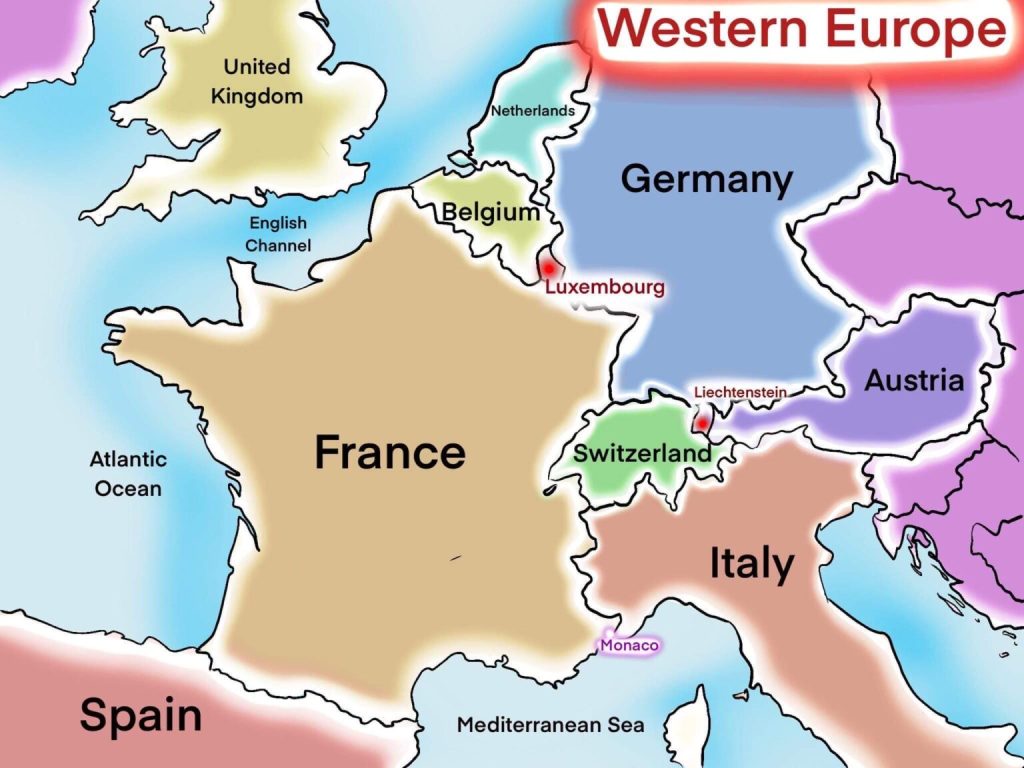
Western Europe: Navigating Economic Challenges, Nationalism, and Regional Security in an Era of Transformation
Introduction
Western Europe, traditionally a pillar of stability, faces a complex array of challenges that test its resilience and unity. As the European Union (EU) grapples with issues of sovereignty, migration, and economic instability, individual countries must balance domestic priorities with collective security and global leadership. Western Europe’s central role in global markets, climate initiatives, and NATO alliances places the region at the heart of international developments. From the rise of nationalism to energy dependency on Russia, this analysis explores the key conflicts and dynamics shaping Western Europe’s future.
France: Economic Protests, Immigration Debates, and Rising Nationalism
Conflict Overview:
France faces growing social unrest driven by economic inequality, labor reforms, and debates over national identity. President Emmanuel Macron’s push for pension reform has sparked nationwide protests, while issues around immigration and integration continue to divide the French public. Far-right parties like Marine Le Pen’s National Rally have gained traction, capitalizing on public discontent with the status quo and advocating for stricter immigration policies.
Current Dynamics:
The recent pension reforms, which increase the retirement age from 62 to 64, have been met with large-scale strikes and protests. Immigration also remains a contentious issue, with public opinion split between welcoming refugees and tightening borders. Additionally, the rise of nationalist rhetoric has led to heated debates over secularism, Islam, and the French state’s role in promoting cultural cohesion.
Key Actors:
- French government, led by President Emmanuel Macron
- Trade unions and civil society groups
- National Rally and other right-wing political movements
Implications:
France’s internal unrest reflects broader tensions within Western Europe, where economic strain and concerns about national identity fuel populist sentiment. How France manages these pressures will impact its domestic stability and the EU’s broader cohesion. As a major EU power, France’s approach to social policy and integration will shape regional policy trends and set a tone for other European nations facing similar challenges.
Germany: Energy Transition, Economic Stability, and Refugee Policy
Conflict Overview:
Germany, Europe’s largest economy, is in the midst of a critical energy transition, moving away from nuclear power and aiming to reduce its dependence on Russian gas amid the war in Ukraine. Domestically, Germany faces economic pressures from inflation, workforce shortages, and demographic challenges, while its role as a leader in European refugee policy continues to spark debate.
Current Dynamics:
The war in Ukraine accelerated Germany’s shift to renewable energy sources and diversified energy imports, leading to investments in LNG terminals and renewables. Meanwhile, Germany’s commitment to accepting refugees—especially from Syria, Afghanistan, and now Ukraine—has met with both support and opposition domestically, as integration remains a complex issue with social and economic implications.
Key Actors:
- German government, led by Chancellor Olaf Scholz’s coalition
- Renewable energy sector and traditional energy companies
- Far-right parties like Alternative for Germany (AfD), which opposes immigration policies
Implications:
Germany’s transition to a low-carbon economy will be crucial for the EU’s climate goals and energy independence. Success in managing refugee integration and demographic challenges could serve as a model for Europe, but setbacks could exacerbate populist sentiment, complicating Germany’s role as an anchor of stability within the EU.
Italy: Political Instability, Economic Reforms, and Migration Pressures
Conflict Overview:
Italy has struggled with frequent political changes, economic stagnation, and high public debt, which limit its ability to address systemic issues. Migration remains a flashpoint in Italy, which serves as a major entry point for migrants from North Africa. The far-right government led by Prime Minister Giorgia Meloni has introduced restrictive immigration policies, reflecting a shift toward nationalism and skepticism about EU integration.
Current Dynamics:
Meloni’s government has introduced reforms focused on reducing migration and addressing economic challenges, with measures to promote Italian industry and protect national interests. These policies have led to tensions with the EU, particularly around migrant distribution and the use of EU recovery funds aimed at modernizing Italy’s economy.
Key Actors:
- Italian government, led by Prime Minister Giorgia Meloni
- EU institutions and migrant advocacy groups
- Italian civil society and pro-European political factions
Implications:
Italy’s political direction will shape its relations with the EU and influence EU migration policy. The nationalist policies of Meloni’s government highlight the growing divide within the EU on migration, which could affect cohesion on other EU-wide issues like economic reform and regional security.
Spain: Catalonia, Economic Inequality, and the Push for Federalism
Conflict Overview:
Spain’s issues with regional autonomy are longstanding, with Catalonia at the forefront of calls for independence. Despite a 2017 referendum declaring independence, Catalonia remains part of Spain, but tensions continue. Meanwhile, economic inequality and youth unemployment are persistent issues, and calls for a more federal system have emerged as a way to manage regional differences.
Current Dynamics:
The Spanish government has made efforts to negotiate with Catalonian leaders, offering limited concessions while opposing full independence. Economic pressures, particularly post-pandemic, have driven reforms aimed at reducing unemployment and promoting regional development, though there is resistance to extensive federalization.
Key Actors:
- Spanish government and regional governments (especially Catalonia)
- Pro-independence groups in Catalonia
- Nationalist parties opposed to regional autonomy
Implications:
Spain’s handling of regional autonomy could impact other European countries with similar issues, such as Belgium. Economic reforms and decentralization could either ease tensions or exacerbate them, depending on the outcomes. Spain’s approach to Catalonia may set a precedent for how European countries manage separatist movements.
Belgium: Language Divisions, Regional Autonomy, and Governance Challenges
Conflict Overview:
Belgium’s unique structure, split between Dutch-speaking Flanders and French-speaking Wallonia, creates constant political tension. Calls for greater regional autonomy often lead to deadlock, with coalition governments struggling to bridge linguistic and cultural divides. Economic inequality between the regions compounds these issues.
Current Dynamics:
Belgium has pursued complex federalization efforts to address regional demands, but governance challenges remain. The repeated inability to form stable governments has underscored the country’s fragility, with nationalist parties in Flanders pushing for even greater autonomy or, in some cases, independence.
Key Actors:
- Belgian federal government and regional governments
- Flemish nationalist parties
- EU institutions
Implications:
Belgium’s regional tensions highlight the challenges of maintaining unity in multicultural and multilingual states. How Belgium resolves these issues may offer insights for the EU’s own balancing act between unity and diversity, particularly as more regions in Europe seek greater autonomy.
The Netherlands: Populism, Environmental Protests, and Energy Policy
Conflict Overview:
The Netherlands, known for its progressive social policies, has seen a rise in populist sentiment, particularly around immigration and environmental policy. The government’s aggressive climate policies, including regulations on agriculture and nitrogen emissions, have led to protests from farmers and businesses who argue that the policies threaten their livelihoods.
Current Dynamics:
Environmental protests, led by Dutch farmers opposing nitrogen reduction targets, have highlighted the tension between climate goals and economic interests. Additionally, the populist Party for Freedom and anti-immigrant sentiments have gained traction, reflecting broader anxieties over national identity and the impact of EU policies on local industries.
Key Actors:
- Dutch government and environmental agencies
- Populist parties like the Party for Freedom (PVV)
- Farming associations and environmental advocacy groups
Implications:
The Netherlands’ approach to balancing environmental sustainability with economic interests is closely watched within the EU. Success or failure in this area will impact the EU’s climate agenda and the feasibility of ambitious emissions targets, as well as the public’s support for green policies across Europe.
Portugal: Economic Recovery, Youth Emigration, and Social Reforms
Conflict Overview:
Portugal’s economic challenges, including low wages and high youth emigration, pose issues for long-term growth and stability. The government has introduced social reforms aimed at attracting investment and addressing inequality, yet the country remains vulnerable to external economic shocks.
Current Dynamics:
Portugal has been working to attract foreign investment, particularly in technology and renewable energy, to modernize its economy. However, many young people leave the country due to limited job opportunities, contributing to a demographic decline that could impact the workforce in the coming years.
Key Actors:
- Portuguese government and investment agencies
- EU economic support programs
- Labor unions and youth advocacy groups
Implications:
Portugal’s success in revitalizing its economy could offer a model for Southern European countries facing similar issues. However, if youth emigration and economic stagnation persist, Portugal may struggle with an aging population and decreased economic vitality.
Regional Issues: Immigration, Security, and Climate Action
The challenges facing Western Europe are not isolated; they are interlinked by shared economic frameworks, EU policies, and common security concerns. Western Europe’s commitment to humanitarian values, combined with economic constraints, makes immigration a perennial issue, with disputes over migrant quotas and border control policies creating internal EU tensions. Additionally, climate action remains a high priority, as Western European countries seek to lead on global environmental issues while managing domestic resistance.
Conclusion: Unity in Diversity or Fragmentation?
Western Europe’s future depends on its ability to navigate a balance between regional identity, economic stability, and EU-wide cohesion. The pressures from rising nationalism, migration, and economic reform push countries in different directions, testing the unity of the EU and the political stability of its member states. Western Europe’s choices in the coming years will shape not only the region but also the global order, setting examples—or warnings—on issues ranging from social justice to sustainable development.
As Western Europe tackles these interconnected challenges, the region’s approach will either strengthen the European Union’s model of unity in diversity or expose its limits, potentially leading to fragmentation. Western Europe stands at a crossroads where decisions on migration, climate policy, economic reform, and national sovereignty will define its future trajectory. Countries like France, Germany, and Italy are not only charting their own paths but also influencing the direction of the EU as a whole.
If Western Europe successfully addresses its internal tensions and finds common ground, it could emerge as a global leader on issues like human rights, sustainability, and democratic resilience. However, if fragmentation and populist forces continue to rise, the EU could face significant challenges in maintaining cohesion and influence on the world stage. The choices Western Europe makes will shape its legacy and impact the stability, prosperity, and unity of the region for generations to come.
 Apocalypse Now Threedux: World War Thr33
Leave a comment