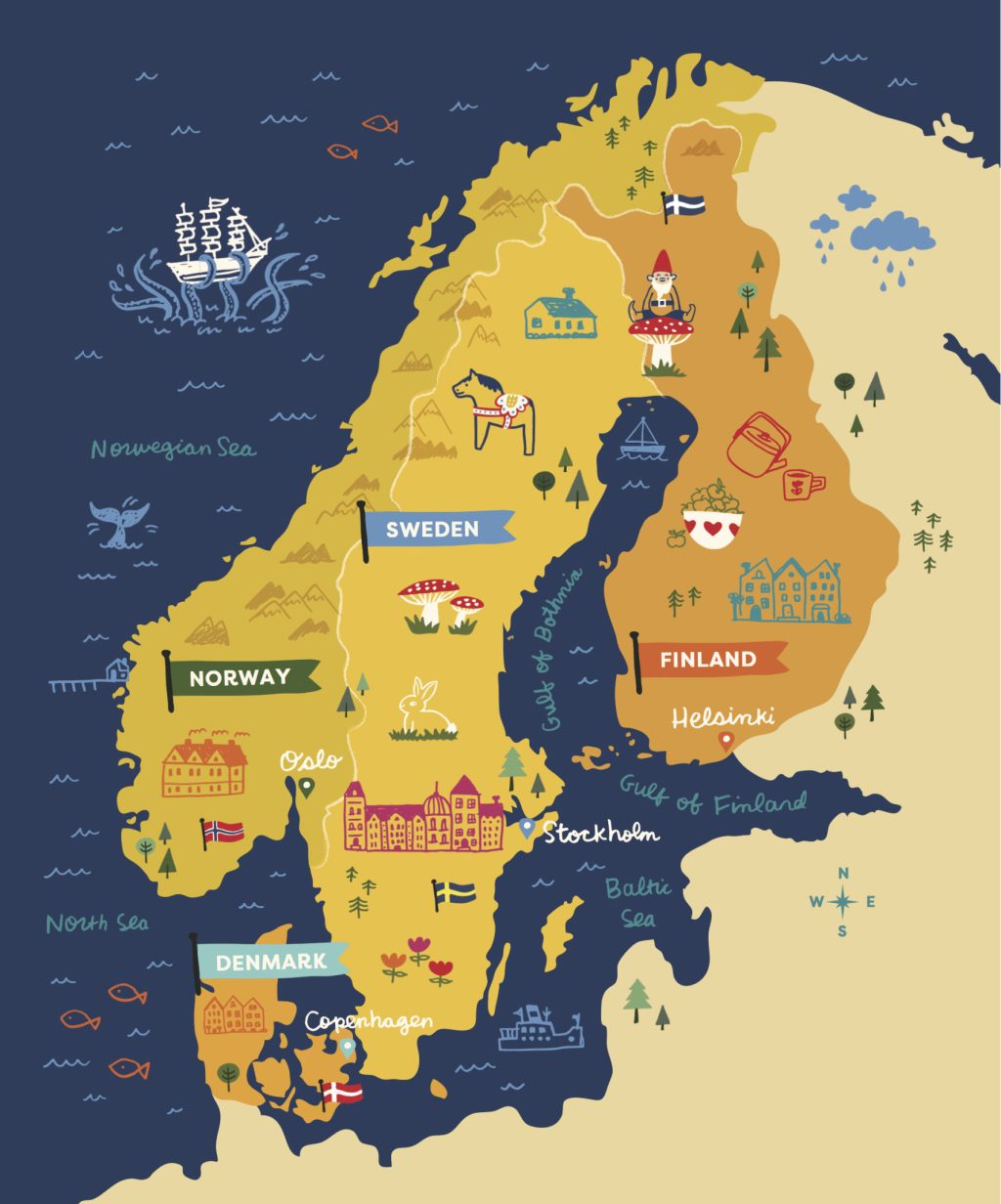
Scandinavia: Security, Sustainability, and Strategic Adaptations in Northern Europe
Introduction
Scandinavia—encompassing Norway, Sweden, and Denmark—is a region known for its social welfare systems, commitment to environmental sustainability, and relatively high standards of living. As part of the broader Nordic family, which also includes Finland and Iceland, Scandinavia has long promoted a model of liberal democracy, peaceful diplomacy, and economic stability. However, the region is adapting to new challenges posed by security concerns, particularly in the wake of Russia’s actions in Ukraine, and pressures from climate change, which are reshaping its energy policies and environmental commitments.
Scandinavia’s geopolitical positioning between NATO and Russia, combined with its reputation for sustainability, places it at the intersection of key global issues, from security dynamics in the Arctic to the green energy transition. This analysis examines Scandinavia’s security realignments, energy strategies, economic adaptations, and environmental leadership, shedding light on the region’s evolving role in Europe and the world.
Security Realignments: NATO Membership and Russian Tensions
Security Overview:
The Russian invasion of Ukraine in 2022 profoundly impacted Scandinavia’s security outlook. Sweden and Finland, both traditionally non-aligned militarily, made historic moves by applying for NATO membership, driven by heightened fears of Russian aggression in the Baltic region and broader Eastern Europe. Norway, already a NATO member, has strengthened its role within the alliance, given its proximity to Russia’s strategic assets in the Arctic.
Current Dynamics:
Sweden’s application for NATO membership, while strongly supported domestically, has encountered delays due to concerns from member states, most notably Turkey. However, Sweden’s integration into NATO is expected to solidify, contributing to a more cohesive security bloc in Northern Europe. Norway, as one of NATO’s key Arctic members, has enhanced military preparedness, particularly in the Arctic, where Russian military activities and strategic interests raise concerns.
Key Actors:
- Swedish and Finnish governments, pursuing NATO membership and strengthening defense partnerships
- Norwegian government, reinforcing Arctic and regional defense within NATO
- Russian government, viewing NATO expansion in Scandinavia as a security threat
Implications:
NATO membership for Sweden and Finland will likely transform Northern Europe into a robust security zone, creating a unified defensive front from Norway through the Baltic States. This alignment may deter Russian assertiveness, yet it also increases Scandinavia’s strategic importance in NATO, potentially making the region a focal point in any future tensions with Russia. The shift underscores Scandinavia’s departure from traditional neutrality and signals a new era of militarization and preparedness in response to evolving threats.
Energy Transition: Green Ambitions and the Realities of European Energy Security
Energy Overview:
Scandinavia has been a global leader in renewable energy, with Denmark pioneering wind energy, Norway leveraging hydroelectric power, and Sweden making strides in nuclear and clean energy technology. However, Europe’s energy crisis, exacerbated by reduced gas supplies from Russia, has put pressure on all European nations to secure alternative energy sources and to accelerate the transition to renewables.
Current Dynamics:
Denmark has committed to becoming carbon-neutral by 2050, expanding its offshore wind capacity and pioneering “energy islands” to create and store wind power in the North Sea. Sweden, a major player in green technology, continues to innovate in sustainable steel and electric vehicle batteries. Norway, while reliant on oil and gas exports, is investing heavily in offshore wind and green hydrogen projects, balancing its role as an energy supplier with commitments to emissions reduction.
Key Actors:
- Danish government, expanding offshore wind and energy islands in the North Sea
- Swedish and Norwegian governments, investing in renewable energy infrastructure
- EU Green Deal and energy policies, supporting Scandinavia’s transition and integration into the European energy market
Implications:
Scandinavia’s leadership in renewable energy enhances its position as a model for sustainable development, but balancing green ambitions with energy security challenges requires careful planning. The region’s energy exports and green technology can strengthen Europe’s energy independence from Russia. Scandinavia’s approach may set an example for other nations facing similar dilemmas, underscoring the importance of scalable renewable projects and cross-border energy cooperation.
Economic Adaptations: Innovation, Technology, and Social Welfare
Economic Overview:
Scandinavia’s economies are known for their innovation, high standards of living, and strong social welfare systems. The region excels in sectors like clean technology, digital solutions, and advanced manufacturing. However, global economic pressures—including inflation, supply chain disruptions, and labor shortages—challenge Scandinavia’s resilience, pushing for adaptability in a changing economic landscape.
Current Dynamics:
Sweden’s technology sector, driven by companies like Spotify and Klarna, continues to be a leader in digital innovation, while Denmark is advancing its biotechnology and pharmaceuticals sectors. Norway, with its wealth fund from oil revenues, is transitioning investment toward sustainable industries and innovation. All three countries prioritize green growth and sustainability, with public and private sectors investing in eco-friendly industries, from electric vehicles to circular economy initiatives.
Key Actors:
- Scandinavian governments, fostering innovation through education and incentives
- Global tech and green industries, benefiting from Scandinavia’s digital and environmental focus
- EU frameworks, supporting Scandinavian economies with digital and green policy alignment
Implications:
Scandinavia’s focus on high-tech innovation and green growth reinforces its reputation as a global leader in sustainable development. However, balancing social welfare with economic competitiveness remains a challenge as labor shortages grow and inflation affects living costs. By continuing to invest in education, digital skills, and eco-friendly industries, Scandinavia can sustain economic resilience and ensure that the benefits of growth are widely shared.
Environmental Leadership: Climate Action and Arctic Policy
Environmental Overview:
Scandinavia’s commitment to environmental sustainability is globally recognized, with policies promoting low-carbon economies, biodiversity preservation, and climate adaptation. The region’s proximity to the Arctic, where climate impacts are severe, heightens Scandinavia’s role in international environmental policy and positions it as an advocate for climate action and Arctic conservation.
Current Dynamics:
Norway, Sweden, and Denmark play active roles in the Arctic Council, collaborating on issues such as sustainable fisheries, environmental protection, and indigenous rights. The rapid melting of Arctic ice has opened new shipping routes and raised interest in resource extraction, intensifying geopolitical and environmental stakes. Scandinavian nations advocate for responsible Arctic governance and caution against overexploitation, though tensions with Russia complicate cooperation.
Key Actors:
- Arctic Council, with Scandinavian nations advocating for sustainable Arctic policies
- Scandinavian governments, implementing ambitious carbon-neutral targets
- Environmental NGOs and indigenous communities, supporting climate action and conservation
Implications:
Scandinavia’s role in Arctic policy highlights its commitment to responsible environmental stewardship. The region’s approach to the Arctic, prioritizing conservation over commercial exploitation, may help set standards for Arctic governance. However, climate change pressures continue to accelerate, demanding both domestic action and international cooperation. Scandinavia’s environmental leadership can influence global standards, but collaboration with non-Western Arctic stakeholders, including Russia, remains essential for meaningful progress.
The Role of External Powers: EU Alignment, U.S. Partnerships, and Relations with Russia
Geopolitical Overview:
Scandinavia’s strategic location and policy alignments position it as a key player in the EU and a natural ally of the U.S. in European security matters. At the same time, Russia’s proximity and recent actions have reshaped Scandinavia’s defense strategies, while EU integration strengthens economic and policy ties with Europe.
Current Dynamics:
Sweden and Finland’s bids for NATO membership align Scandinavia with U.S. interests in European security, reinforcing the region’s defense posture in the Arctic and Baltic. The EU’s Green Deal and Digital Agenda also align with Scandinavia’s economic and environmental goals, while U.S.-Scandinavian partnerships in technology and climate offer mutual benefits. However, Russia’s proximity and geopolitical ambitions demand careful diplomacy, especially as Arctic interests converge.
Key Actors:
- EU, providing policy alignment and market integration for Scandinavian initiatives
- NATO, offering defense frameworks for Scandinavian security
- Russian government, a neighbor and strategic competitor in the Arctic
Implications:
Scandinavia’s alignment with the EU and U.S. strengthens its security and economic resilience, but managing Russian relations requires diplomatic finesse. With heightened tensions in the Baltic and Arctic, Scandinavia must balance its commitments to allies with its proximity to Russia. This approach will be crucial in maintaining stability and safeguarding Scandinavian values of peace and cooperation.
Conclusion: Scandinavia’s Evolving Role on the Global Stage
Scandinavia, known for its peaceful diplomacy, environmental leadership, and innovation, stands at a turning point as it navigates new security realities and economic and environmental challenges. Its alignment with NATO signals a shift in defense strategy, while its commitment to sustainability positions it as a global leader in the green transition.
Scandinavia’s ability to adapt will depend on balancing external partnerships with domestic priorities, ensuring resilience amid global uncertainty. As Scandinavia leads in climate action, digital innovation, and security realignment, it has the potential to inspire other regions with its progressive model of governance. Scandinavia’s choices in this era of transformation will define its role as a beacon of stability, sustainability, and forward-thinking in an increasingly interconnected world.
 Apocalypse Now Threedux: World War Thr33
Leave a comment