Operation Astute: Australia’s Intervention in Timor-Leste and the Quest for Stability
Introduction
Operation Astute, launched in May 2006, was a military intervention by Australia and allied nations in Timor-Leste (East Timor) to restore order amid political instability and violence. For Australia, this operation underscored its commitment to security and stability in the Asia-Pacific region, especially in its “backyard” of Southeast Asia. Timor-Leste, a young and fragile nation that gained independence from Indonesia in 2002, was struggling with internal divisions, and Operation Astute became a case study in post-conflict stabilization, peacekeeping, and regional cooperation. While the operation was successful in restoring short-term order, it highlighted the ongoing challenges of governance, nation-building, and international assistance in fragile states.
Background: Timor-Leste’s Road to Independence and Initial Instability
Timor-Leste’s modern history has been marked by colonialism, conflict, and struggle for self-determination. Formerly a Portuguese colony, East Timor was invaded by Indonesia in 1975 after a brief declaration of independence. The ensuing occupation saw widespread human rights abuses and resistance from East Timorese, leading to decades of violence. In 1999, after years of international pressure, Indonesia agreed to a United Nations-administered referendum in which the East Timorese overwhelmingly voted for independence.
The transition to independence, however, was marred by violence, as pro-Indonesian militias launched brutal attacks on civilians and infrastructure, prompting international intervention. The UN established the United Nations Transitional Administration in East Timor (UNTAET), which oversaw East Timor’s transition to independence in 2002. However, Timor-Leste remained a fragile state, with high poverty, weak institutions, and deep divisions among political factions and the security forces. These underlying tensions set the stage for the 2006 crisis and the subsequent intervention by Australian-led forces.
The 2006 Crisis: Political Factionalism and the Breakdown of Order
In early 2006, Timor-Leste’s internal divisions reached a breaking point. A group of nearly 600 soldiers—about one-third of the country’s defense force—protested against alleged discrimination in promotions and working conditions, particularly between soldiers from the eastern and western regions of the country. The soldiers, known as “petitioners,” were subsequently dismissed, sparking widespread unrest and leading to violent clashes between factions within the security forces. Rivalries between easterners (the “Firaku”) and westerners (the “Kaladi”) became a flashpoint, inflaming social tensions across Dili, the capital.
The unrest quickly spiraled into a larger crisis, with violent clashes between police and military forces, arson, looting, and the displacement of tens of thousands of civilians. Prime Minister Mari Alkatiri’s government struggled to maintain control, and as the violence escalated, Timor-Leste’s leaders requested international assistance. This request led Australia to spearhead Operation Astute, with support from New Zealand, Malaysia, and Portugal, marking a significant intervention in a neighboring state’s internal crisis.
Operation Astute: Objectives, Deployment, and Initial Success
Australia launched Operation Astute on May 25, 2006, deploying approximately 2,500 troops to Timor-Leste with the mission to restore order, protect civilians, and support the Timorese government in reestablishing stability. The operation was authorized with the consent of the Timorese government and had the backing of the United Nations, emphasizing a multilateral approach to peacekeeping.
Australian forces, along with troops from New Zealand, Malaysia, and Portugal, quickly secured key areas in Dili, including government buildings, the airport, and residential neighborhoods. Their immediate focus was to separate rival factions within the security forces and establish safe zones for displaced civilians. The rapid deployment and visible presence of international troops helped reduce violence, and by mid-2006, much of the chaos had subsided. Operation Astute achieved its initial objective of restoring short-term stability and allowing Timor-Leste’s government to resume basic functions.
Challenges and Criticisms: Nation-Building, Sovereignty, and Dependency
While Operation Astute was successful in restoring order, it raised important questions about the long-term impact of foreign intervention in fragile states. The Australian-led intervention was welcomed by many Timorese, but some saw it as an infringement on the country’s sovereignty, particularly as Australia already held significant influence over Timor-Leste’s politics and economy.
Critics argued that the operation, though necessary, did not address the root causes of the crisis—political factionalism, weak institutions, and economic hardships. The reliance on international forces exposed Timor-Leste’s dependency on foreign support, highlighting the need for sustainable institution-building. Some Timorese leaders voiced concerns that repeated interventions could undermine the legitimacy of local authorities, fostering a sense of reliance on international peacekeeping rather than encouraging homegrown solutions to security and governance.
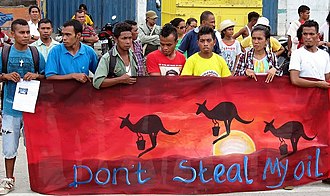
In addition, tensions emerged over Australia’s role in Timor-Leste’s oil and gas resources. The Timor Sea Treaty and subsequent agreements over resource-sharing arrangements remained points of contention, with some Timorese leaders and citizens perceiving Australia’s presence as partially motivated by economic interests rather than purely humanitarian or peacekeeping objectives.
Long-Term Impact: Stabilization and Continuing Struggles
Operation Astute officially ended in 2013, with Australian forces gradually reducing their presence as Timor-Leste’s security situation stabilized. The operation was followed by the United Nations Integrated Mission in Timor-Leste (UNMIT), which continued to support police reform, governance, and rule of law. By the time of the UN’s withdrawal in 2012, Timor-Leste had made strides in security reform and political stability, holding peaceful elections and building institutions to manage its affairs.
However, many challenges remain. Timor-Leste continues to struggle with high poverty rates, youth unemployment, and economic dependency on oil revenues, which are vulnerable to fluctuations in global markets. Political tensions periodically flare, reflecting the underlying social divisions that contributed to the 2006 crisis. The legacy of Operation Astute underscores the need for long-term support beyond military intervention, focusing on economic diversification, education, and governance to build a resilient and self-sufficient state.
Australia’s Role in the Asia-Pacific: Strategic Interests and Regional Responsibility
Operation Astute was a defining moment for Australia’s foreign policy in the Asia-Pacific, showcasing Canberra’s willingness to intervene in regional crises to maintain stability. For Australia, a stable Timor-Leste is not only a moral concern but also a strategic priority, given the proximity of the two nations and their shared economic interests in the Timor Sea. Operation Astute highlighted Australia’s role as a regional power with the capacity to project military force in Southeast Asia, reinforcing its strategic influence.
However, Australia’s intervention in Timor-Leste also demonstrated the balancing act required when intervening in the internal affairs of neighboring countries. Australia’s involvement raised questions about the extent of its influence and the perception of Timor-Leste as a “junior partner” dependent on Australian support. While the operation cemented Australia’s reputation as a stabilizing force, it also highlighted the risks of fostering dependency and the complexities of managing post-intervention relationships.
Conclusion: Lessons from Operation Astute for Peacekeeping and Nation-Building
Operation Astute stands as a significant example of peacekeeping and stabilization in the Asia-Pacific, demonstrating the potential and limitations of international intervention in fragile states. The operation successfully restored short-term order, but it also underscored the importance of addressing underlying issues to build lasting peace. For Timor-Leste, the experience highlighted the need for resilience and self-reliance in managing internal challenges, emphasizing that true stability requires more than military solutions.
As Australia and Timor-Leste continue their relationship, the legacy of Operation Astute serves as a reminder of the importance of respectful partnership, local empowerment, and sustainable support for fragile states. In a region facing complex security dynamics, Operation Astute offers valuable lessons in balancing intervention with sovereignty, diplomacy with development, and immediate security with long-term resilience. For Timor-Leste, the path to lasting stability continues, with its people navigating both the opportunities and the trials of nationhood in a complex and interconnected world.
 Apocalypse Now Threedux: World War Thr33
Leave a comment