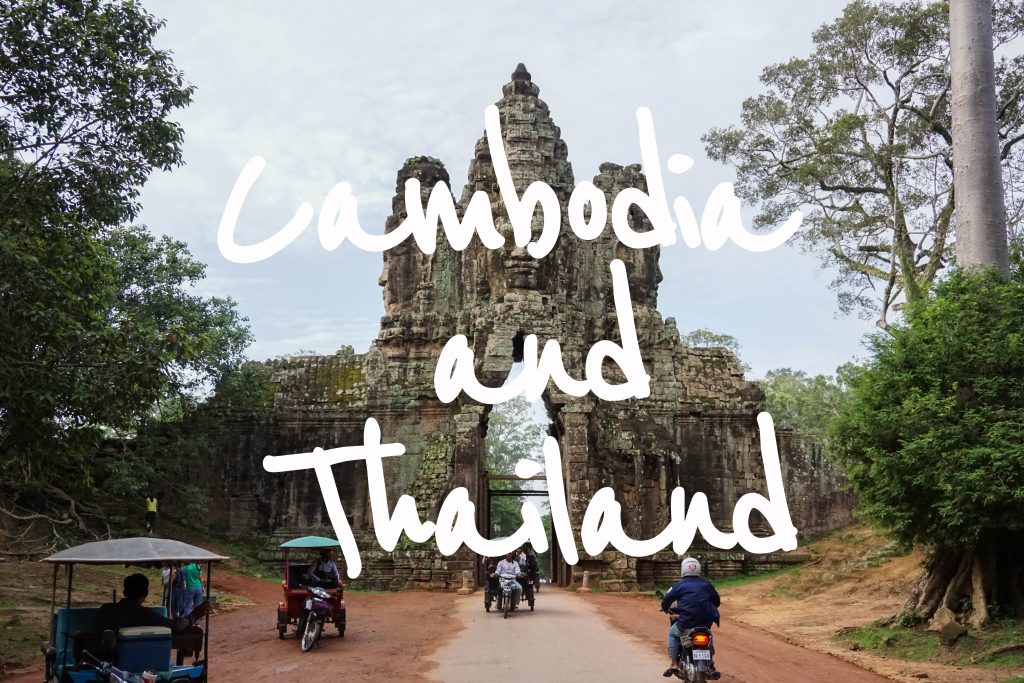
Cambodia and Thailand: Ancient Temples, Border Tensions, and Modern Diplomacy
Introduction
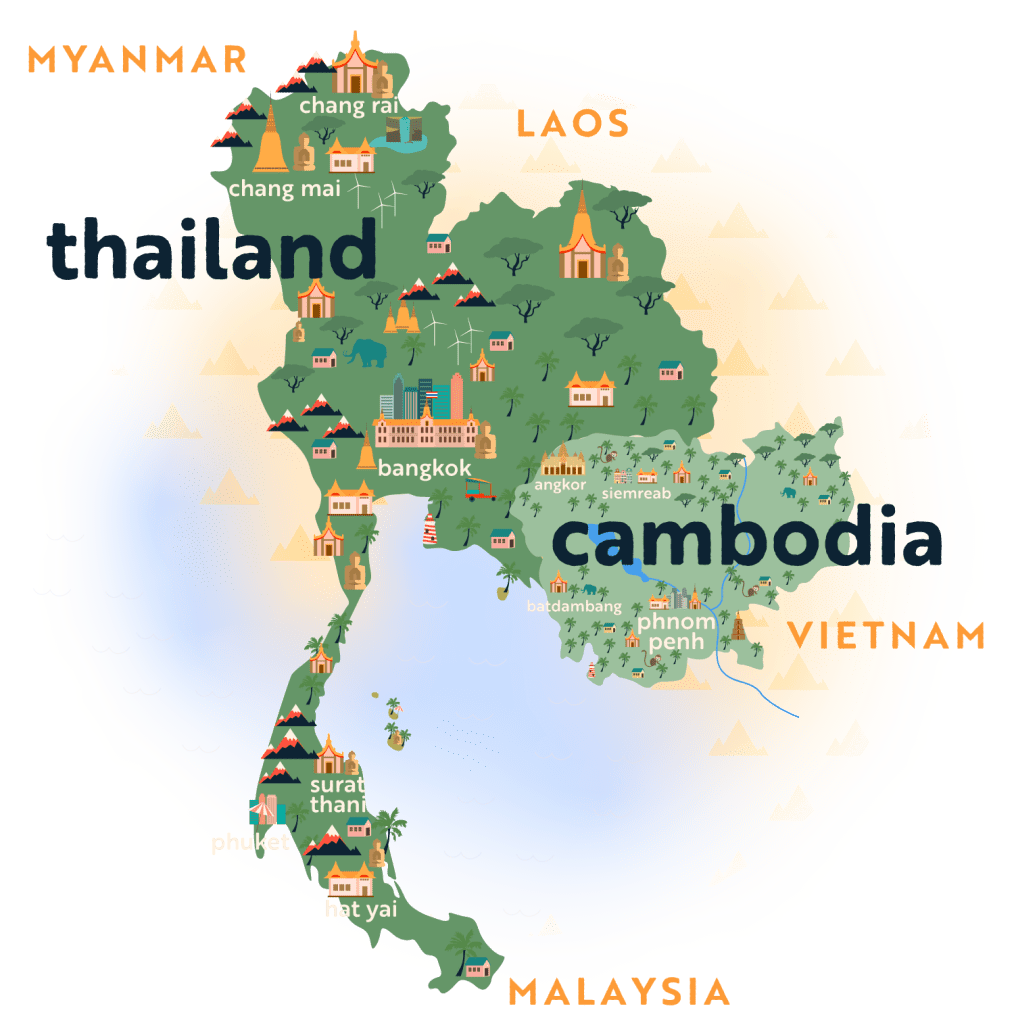
The relationship between Cambodia and Thailand, neighbors in Southeast Asia with a long-shared history, is a complex tapestry woven from centuries-old cultural connections, shared borders, and historical rivalries. While they are connected by a mutual heritage, the border between Cambodia and Thailand has frequently been a point of contention, with disputes arising over territory, national pride, and identity. Central to this tension is the Preah Vihear Temple, a centuries-old Khmer temple perched on a mountain straddling the two countries. This conflict highlights how historical grievances and border disputes can persist into the modern era, impacting not only diplomatic relations but also regional stability.
Today, Cambodia and Thailand maintain a pragmatic relationship shaped by trade, tourism, and regional cooperation. Yet, tensions over border demarcation and national pride remain ever-present, underscoring the delicate balance between neighborly cooperation and rivalry in Southeast Asia.
Historical Background: Ancient Temples and Territorial Claims
The history of Cambodia-Thailand relations dates back centuries to the era of the Khmer Empire, which at its height included much of present-day Thailand, Laos, and Vietnam. Cambodia’s Angkor Wat and Thailand’s Sukhothai both represent remarkable achievements of ancient Southeast Asian civilization, but also the historical shifts in influence and power. Over the centuries, borders changed frequently as kingdoms rose and fell, contributing to lingering disputes over territory and cultural heritage.
The central symbol of Cambodia-Thailand territorial tensions is the Preah Vihear Temple, a sacred Hindu-Buddhist site built during the Khmer Empire in the 11th century. Perched atop the Dangrek Mountains, the temple complex is revered by both Cambodians and Thais, but its location on the border has made it a flashpoint of contention. In 1962, the International Court of Justice (ICJ) awarded sovereignty over Preah Vihear to Cambodia, a ruling Thailand grudgingly accepted but continued to contest over the years, especially as competing maps and unclear demarcations fueled misunderstandings.
The Preah Vihear Dispute: Ancient Temple, Modern Conflict
The Preah Vihear Temple dispute reemerged in the spotlight in 2008, when UNESCO designated the temple a World Heritage Site under Cambodian management. Thailand opposed the decision, arguing that it implied sovereignty over adjacent disputed areas, particularly the 4.6 square kilometers surrounding the temple. Nationalist sentiment flared on both sides, with each country’s media and political leaders framing the temple as a matter of national pride and historical justice.
The dispute escalated into violence in 2008 and 2011, with cross-border skirmishes that led to casualties on both sides and the displacement of nearby communities. Artillery fire, military buildups, and civilian evacuations around the temple underscored the intensity of the dispute. Cambodia appealed again to the ICJ, which in 2013 reaffirmed that Cambodia had sovereignty over Preah Vihear and ordered both sides to withdraw troops. While the ruling helped ease tensions temporarily, both countries continue to maintain a cautious military presence around the area, wary of nationalist sentiments that can quickly rekindle conflict.
Diplomatic Efforts and ASEAN’s Role
The Association of Southeast Asian Nations (ASEAN), of which both Cambodia and Thailand are members, has played a key role in defusing tensions and encouraging dialogue. ASEAN’s founding principles prioritize non-interference and peaceful dispute resolution, and the organization has facilitated talks between the two countries to promote de-escalation. During the height of the conflict, ASEAN’s efforts were instrumental in establishing a framework for dialogue and calling for restraint from both sides.
Despite ASEAN’s involvement, however, the organization’s limited capacity to enforce peace highlights the challenges of regional diplomacy. The Preah Vihear dispute underscores the need for ASEAN to develop stronger mechanisms for conflict resolution, as border disputes across Southeast Asia remain sensitive issues. The dispute also demonstrates ASEAN’s limitations when member states prioritize national pride over regional harmony, exposing the limits of regional frameworks in addressing deeply rooted grievances.
Economic and Cultural Ties: Tourism, Trade, and Migration
While Preah Vihear and border tensions capture headlines, Cambodia and Thailand are deeply interconnected through trade, tourism, and cultural exchange. Thailand is one of Cambodia’s largest trading partners, with goods and labor flowing across the border. Cambodian migrant workers make up a significant part of Thailand’s labor force, particularly in construction, agriculture, and manufacturing. Remittances from these workers contribute substantially to Cambodia’s economy, even as they navigate challenges in Thailand related to wages, labor rights, and legal protections.
Tourism is another important bridge between the two countries. Millions of tourists visit Angkor Wat in Cambodia and Thailand’s historical sites each year, often crossing between the two countries as part of a broader exploration of Southeast Asia’s cultural heritage. Collaborative tourism initiatives, such as cross-border travel packages and joint promotion of the region’s cultural heritage, offer economic benefits to both countries and strengthen people-to-people ties.
These economic and cultural connections act as a counterbalance to the border tensions, incentivizing both countries to prioritize pragmatic cooperation over prolonged disputes. However, underlying nationalist sentiment remains strong, and issues such as migrant labor rights and trade imbalances occasionally stir discontent, reminding both nations of the fragile nature of their relationship.
Regional Influence and External Powers
The Cambodia-Thailand relationship is also shaped by the influence of external powers, particularly China and the United States. Cambodia’s close relationship with China has grown significantly in recent years, as Beijing provides Cambodia with economic assistance, infrastructure investment, and military aid. China’s support has strengthened Cambodia’s bargaining power, but it has also raised concerns in Thailand and among ASEAN members about Beijing’s influence in the region.
Thailand, traditionally a U.S. ally with close ties to Japan and South Korea, has pursued a more balanced approach in its foreign policy in recent years, engaging both the U.S. and China to secure its regional interests. The competition for influence between China and the U.S. in Southeast Asia means that both countries are cautious of becoming too closely aligned with either side, as they seek to maintain independence in their foreign policy choices.
The presence of these external powers complicates the Cambodia-Thailand relationship, as each country’s alliances can shape their positions on border and security issues. While China has generally refrained from taking sides on the Preah Vihear dispute, its economic and military support for Cambodia has indirectly influenced Thailand’s approach to the region. The evolving influence of major powers could impact the future of Cambodia-Thailand relations, as both countries navigate their strategic interests in a multipolar region.
Future Prospects: Toward Peaceful Coexistence or Renewed Tensions?
The future of Cambodia-Thailand relations will likely depend on both countries’ ability to manage nationalist sentiment and prioritize regional cooperation. The Preah Vihear dispute remains a sensitive issue, but the ICJ’s 2013 ruling provided a legal framework for both sides to maintain peace if they commit to diplomatic solutions. Continued border skirmishes would harm not only bilateral relations but also both countries’ reputations within ASEAN, where stability and cooperation are highly valued.
Both nations have strong incentives to pursue peaceful coexistence. Cambodia’s growing economy and Thailand’s strategic interests in Southeast Asia benefit from stability, particularly given their shared interests in trade, tourism, and labor markets. Increased collaboration on border management, cultural exchanges, and economic integration would build mutual trust, reducing the likelihood of conflict. Programs aimed at promoting cultural understanding, such as exchange programs and educational partnerships, could further bridge divides, helping to mitigate nationalist sentiments around sensitive historical issues.
Additionally, a joint effort to preserve shared heritage sites, including Preah Vihear, could transform the temple from a symbol of division into one of shared pride, strengthening the bond between the two countries. Establishing Preah Vihear as a cooperative heritage site open to both Cambodian and Thai influences would reflect a commitment to a shared future while respecting each nation’s cultural history.
Conclusion: Balancing History and Cooperation in a New Era
The Cambodia-Thailand relationship encapsulates the complexities of post-colonial borders, cultural heritage, and regional power dynamics. Preah Vihear serves as a reminder of Southeast Asia’s rich history and the enduring significance of national identity and pride. Yet, it also demonstrates the challenges that historical grievances pose to modern diplomacy and regional stability.
For Cambodia and Thailand, the path forward involves balancing historical sensitivities with the practical needs of today’s interconnected world. By prioritizing economic integration, cultural exchange, and diplomatic engagement, the two countries have the potential to redefine their relationship for a new era. Peaceful coexistence, while challenging, would benefit not only Cambodia and Thailand but also the entire Southeast Asian region, setting an example of how shared history and shared borders can be navigated in the pursuit of mutual prosperity and regional stability.
 Apocalypse Now Threedux: World War Thr33
Leave a comment