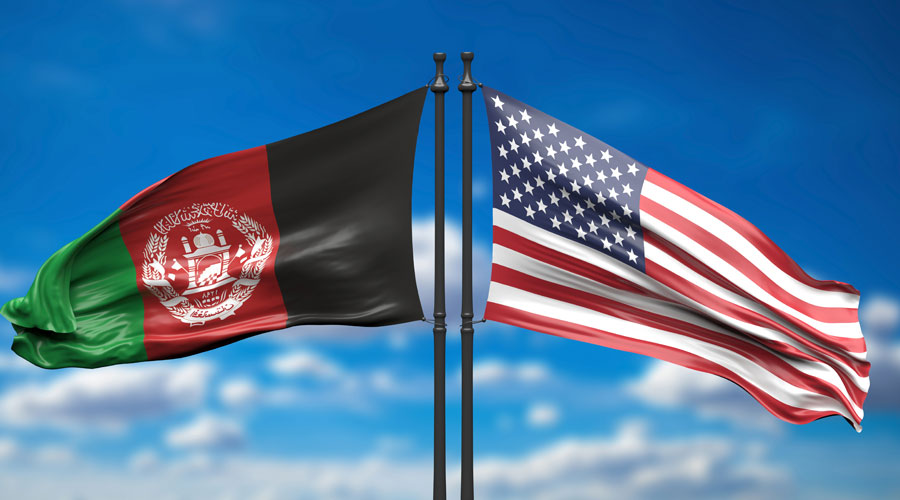
The United States and Afghanistan: Intervention, Withdrawal, and the Legacy of a 20-Year War
Introduction
The relationship between the United States and Afghanistan is one of intervention, transformation, and complex consequences. What began with the U.S.-led invasion in 2001 in response to the September 11 attacks evolved into one of America’s longest and most expensive wars, with far-reaching implications for both countries and the world. The 20-year U.S. presence sought to eliminate al-Qaeda, dismantle the Taliban, and build a stable democratic government. However, the rapid Taliban takeover following the U.S. withdrawal in 2021 left questions about the legacy of American involvement, the cost of nation-building, and Afghanistan’s future under renewed Taliban rule.
Historical Context: The Road to Intervention
Afghanistan’s recent history has been marked by continuous conflict, beginning with the Soviet invasion in 1979. The subsequent Soviet-Afghan War (1979–1989) saw U.S. support for Afghan mujahideen fighters, part of a Cold War strategy to weaken Soviet influence in the region. However, after the Soviet withdrawal, Afghanistan plunged into civil war, eventually leading to the rise of the Taliban in the mid-1990s. The Taliban, a hardline Islamist group, imposed strict laws, and by the late 1990s, Afghanistan had become a safe haven for al-Qaeda, which used the country as a base to plan the 9/11 attacks.
Following 9/11, the U.S. issued an ultimatum to the Taliban: hand over al-Qaeda leader Osama bin Laden or face consequences. When the Taliban refused, the U.S. launched Operation Enduring Freedom, swiftly toppling the Taliban with a coalition of Afghan forces, NATO allies, and U.S. airpower. This initial military success laid the groundwork for what would become a prolonged conflict focused on defeating insurgency, building Afghan security forces, and establishing a democratic government.
The Goals and Challenges of Nation-Building
The U.S. mission in Afghanistan quickly expanded beyond counterterrorism into ambitious nation-building efforts. American and allied forces aimed to construct a democratic state capable of standing against both terrorism and internal conflict. Billions of dollars poured into Afghanistan to build schools, roads, healthcare facilities, and infrastructure. New institutions were established, and women’s rights, education, and media freedom saw notable progress in cities like Kabul.
However, the effort faced significant challenges, including entrenched corruption, power struggles, and resistance from local warlords. The Afghan government’s dependence on foreign aid and the military’s reliance on U.S. support revealed an underlying fragility. While progress was made, much of it remained concentrated in urban areas, leaving rural Afghanistan, where the Taliban retained influence, largely disconnected from these improvements.
The Taliban insurgency gained momentum by exploiting government corruption, poverty, and local grievances, portraying itself as an alternative to a weak government propped up by foreign forces. The war dragged on, with U.S. forces facing an evolving Taliban insurgency that mastered guerrilla tactics and benefitted from sanctuaries in Pakistan, a U.S. ally in the region. The mission’s complexity deepened as the U.S. struggled to balance military action with the diplomatic, economic, and social investments needed to build a resilient Afghan state.
The U.S.-Taliban Peace Process and the Doha Agreement
After years of conflict and rising costs, both in human lives and resources, the U.S. began exploring diplomatic solutions. In 2018, under President Donald Trump’s administration, direct negotiations with the Taliban were initiated, marking the first time the U.S. engaged with the group in formal talks. These discussions culminated in the Doha Agreement in February 2020, where the U.S. agreed to withdraw all troops in exchange for the Taliban’s commitment to prevent Afghanistan from being used as a base for international terrorism and to engage in peace talks with the Afghan government.
The agreement was highly controversial. While it offered a pathway to end America’s longest war, critics argued it legitimized the Taliban and undermined the Afghan government, which was excluded from direct negotiations. Additionally, the Taliban made few concrete concessions on human rights or political inclusivity, raising concerns about the future of freedoms gained during the U.S. presence. However, both sides moved forward, and the U.S. began its withdrawal, hoping for an Afghan-led peace process to follow.
The U.S. Withdrawal and the Taliban’s Return
In April 2021, President Joe Biden announced that the U.S. would complete its withdrawal by September 11, 2021. As U.S. forces departed, the Taliban launched an aggressive offensive, rapidly capturing cities and provinces with minimal resistance from the Afghan National Army. By August, the Taliban had entered Kabul, prompting a chaotic evacuation of American personnel, foreign nationals, and vulnerable Afghans. Images of desperate crowds at Kabul’s airport highlighted the intense fear and uncertainty among Afghans who had worked with U.S. forces or embraced democratic freedoms.
The speed of the Taliban’s return shocked the world and led to widespread criticism of the U.S. withdrawal. Many questioned the effectiveness of the two-decade mission and the durability of the Afghan state. For millions of Afghans, especially women and minorities, the Taliban’s resurgence raised fears of renewed restrictions, human rights abuses, and a return to isolation from the international community.
Human and Economic Costs of the War
The human toll of the U.S.-Afghanistan war is staggering. More than 2,400 U.S. military personnel and tens of thousands of Afghan soldiers and civilians lost their lives. The war also created a vast refugee crisis, with millions of Afghans displaced both internally and abroad. Economically, the U.S. spent over $2 trillion on the war, including military operations, aid, and veterans’ care—a commitment that has sparked debate over America’s foreign policy priorities and the costs of prolonged interventions.
For Afghanistan, the economic consequences of the conflict and subsequent U.S. withdrawal have been severe. The country faces widespread poverty, joblessness, and an economy largely reliant on foreign aid. The sudden cessation of this aid following the Taliban takeover has plunged Afghanistan into a humanitarian crisis, with millions facing food insecurity and limited access to healthcare and education. Despite initial promises of moderation, the Taliban’s restrictions on women’s employment, education, and public life have further hindered the country’s recovery.
The Regional Dimension: Pakistan, Iran, China, and Russia
Afghanistan’s instability has implications for the entire region. Pakistan, which has complex ties to the Taliban, faces challenges in balancing its influence over Afghanistan with concerns about spillover extremism and refugee flows. Iran, which hosts millions of Afghan refugees, also watches Afghanistan’s developments closely, wary of sectarian violence and economic destabilization.
China, with its strategic interests and investment in neighboring Pakistan and Central Asia, sees Afghanistan as both an opportunity and a risk. While the Taliban has assured China that it will not support separatist groups like the Uyghur extremists, China is cautious in its engagement, especially as instability could impact its Belt and Road Initiative. Russia, too, has increased its involvement in Afghanistan, working with regional powers to prevent extremist groups from gaining a foothold near its sphere of influence in Central Asia.
These regional dynamics complicate Afghanistan’s path forward, with neighboring countries balancing their own security concerns, economic interests, and geopolitical rivalries.
The Legacy of U.S. Involvement: Lessons and Criticisms
The legacy of U.S. involvement in Afghanistan is the subject of intense debate. While the mission initially succeeded in dismantling al-Qaeda’s operations, its expansion into nation-building revealed the limits of American power and the challenges of imposing democratic structures in a society with distinct cultural, political, and tribal complexities. Critics argue that America’s reliance on military solutions overlooked local dynamics, contributing to the Afghan government’s dependency and failure to build a self-sustaining state.
Furthermore, the decision to engage directly with the Taliban while excluding the Afghan government from negotiations has raised questions about U.S. credibility as an ally. For Afghanistan, the abrupt withdrawal and the return of the Taliban have left a generation of Afghans facing an uncertain future, marked by the potential loss of hard-won freedoms and rights.
Future Prospects: Afghanistan’s Uncertain Path Forward
Afghanistan’s future under Taliban rule remains uncertain. The Taliban faces a daunting task in governing a country plagued by economic crisis, humanitarian needs, and international isolation. Efforts to seek international recognition and aid have been hampered by the Taliban’s reluctance to moderate its policies on human rights, particularly women’s rights, and by concerns over harboring extremist groups.
The international community, led by the U.S., faces difficult choices in responding to Afghanistan’s crisis. While humanitarian assistance is essential to avert mass suffering, questions persist about how to engage with the Taliban without legitimizing its rule or compromising principles of human rights and democracy. Regional powers will likely play a more prominent role, as countries like China, Russia, and Iran navigate their own interests and security concerns in an Afghanistan governed by the Taliban.
Conclusion: A Complex Legacy and the Quest for Stability
The U.S. intervention in Afghanistan was a transformative chapter with profound costs and consequences, both for Afghans and Americans. It demonstrated the complexities and limits of modern military intervention and the challenges of establishing stability and governance in a deeply divided society. While the mission succeeded in its original counterterrorism objective, the rapid collapse of the Afghan government exposed the fragile foundations on which the U.S. had built its strategy.
For Afghanistan, the challenges of rebuilding under Taliban rule are daunting, and the aspirations of millions now hang in the balance. As the country faces a future marked by economic hardship, potential isolation, and humanitarian crisis, Afghanistan’s story remains a powerful reminder of the stakes and challenges inherent in foreign intervention, nation-building, and the pursuit of a stable world order. The U.S.-Afghanistan experience underscores the need for a nuanced approach to foreign intervention—one that considers local dynamics, sustainable governance, and the limits of military solutions. For the U.S., Afghanistan serves as a sobering lesson about the costs and complexities of nation-building, urging policymakers to reassess long-term strategies and priorities in a rapidly shifting global landscape.
For Afghanistan itself, the future is uncertain. The resilience of its people, coupled with the international community’s humanitarian efforts, may offer a path forward, but the shadow of war and instability looms large. As Afghanistan navigates its path under Taliban rule, the nation’s fate will likely be shaped not only by internal dynamics but also by the engagement—or disengagement—of the world around it. Afghanistan’s journey remains a powerful testament to the enduring challenges of creating lasting peace and stability in a nation with such deep-rooted struggles and aspirations.
 Apocalypse Now Threedux: World War Thr33
Leave a comment