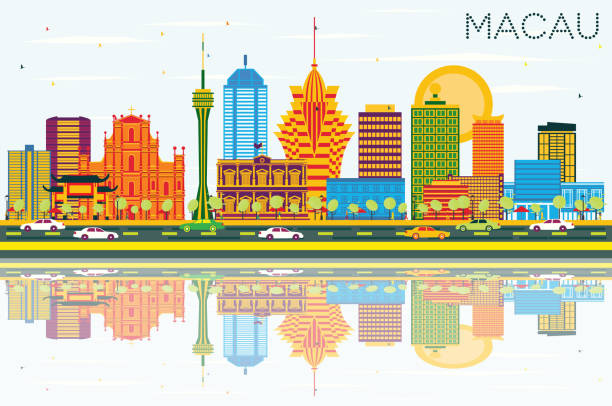
Macau: The “Las Vegas of Asia” and China’s Unique Cultural Crossroads
Macau: Asia’s Gaming Capital and the Challenge of Diversification
Introduction
Macau, often called the “Las Vegas of Asia,” is a unique blend of Chinese and Portuguese influences, a former colony turned economic powerhouse with a rich cultural tapestry. As a Special Administrative Region (SAR) of China, like Hong Kong, Macau operates under the “one country, two systems” principle, allowing it to maintain a high degree of autonomy. However, Macau’s dependency on its gambling industry makes it highly vulnerable to policy changes from Beijing and global economic shifts. As Macau seeks to diversify beyond casinos, its future reveals the opportunities and challenges facing an economy that’s been shaped by tourism, tradition, and the tightening embrace of mainland China.
A Brief History: From Portuguese Settlement to SAR
The story of Macau began in 1557, when Portuguese traders established a settlement on the southern coast of China. For centuries, Macau thrived as a trade hub, connecting China to Europe and other parts of Asia. While still part of Chinese territory, Macau was administered by Portugal until the late 20th century, leaving a lasting cultural legacy. Portuguese architecture, cuisine, and religion became integral to Macau’s identity, giving it a unique character among Chinese cities.
In 1999, Macau was officially handed over to China under the “one country, two systems” framework, which guarantees autonomy until at least 2049. Under this system, Macau retains its own legal system, economic policies, and social customs. Yet, as Beijing asserts greater control over its SARs, Macau faces increasing pressure to align with national interests, raising questions about its autonomy and distinct identity.
Macau’s Economic Engine: The Rise of the Gambling Industry
The gambling industry has been the cornerstone of Macau’s economy since the early 2000s, transforming the city into the world’s largest gambling center. When the government ended a longstanding monopoly on gambling in 2002, major international casino operators, including MGM, Sands, and Wynn, entered the market, building massive resorts and gaming complexes. Today, Macau’s gambling revenue exceeds even that of Las Vegas, largely driven by high-spending tourists from mainland China.
This reliance on gambling, however, has made Macau’s economy highly volatile and dependent on policy shifts from Beijing. In recent years, China’s anti-corruption campaigns have discouraged VIP gambling, which used to account for a large portion of Macau’s revenues. During the COVID-19 pandemic, strict travel restrictions led to a sharp decline in tourism, severely impacting Macau’s economy. These challenges highlight the need for economic diversification as Macau works to reduce its dependence on gambling and build a more resilient economy.
Cultural Heritage: A Blend of East and West
Macau’s unique history as a Portuguese settlement within China has left it with a rich cultural heritage. The historic center of Macau, a UNESCO World Heritage Site, features Portuguese colonial architecture, churches, and public squares, creating a distinctive blend of Eastern and Western styles. Iconic sites like the Ruins of St. Paul’s, Senado Square, and the A-Ma Temple illustrate Macau’s diverse past and draw millions of tourists each year.
Macau’s culture is also reflected in its language, cuisine, and festivals. Although most residents speak Cantonese, Portuguese is still an official language, and street signs appear in both languages. The city’s cuisine, known as Macanese, combines Chinese and Portuguese flavors, with dishes like African chicken and Portuguese egg tarts symbolizing this fusion. Annual festivals, including Chinese New Year, the Macau Grand Prix, and the Feast of the Drunken Dragon, celebrate Macau’s multicultural identity, making it a unique cultural destination in Asia.
The Role of Beijing and the Push for Greater Control
While Macau enjoys a high degree of autonomy, Beijing’s influence has grown in recent years. The Chinese government sees Macau as a model of successful integration under the “one country, two systems” framework, particularly in contrast to Hong Kong, where pro-democracy protests have challenged Beijing’s authority. In 2019, Xi Jinping praised Macau’s loyalty to the mainland, emphasizing its role in demonstrating the benefits of unity with China.
Beijing’s growing influence is evident in its support for policies that diversify Macau’s economy, with the Greater Bay Area initiative as a key component. This project aims to integrate Macau with Hong Kong and nine cities in Guangdong Province, turning the region into a major economic hub. However, critics argue that Beijing’s involvement is gradually eroding Macau’s autonomy, as increased oversight over education, media, and politics aligns Macau more closely with mainland policies.
The Need for Diversification: Reducing Dependence on Casinos
The COVID-19 pandemic exposed the risks of Macau’s dependence on its gambling industry. In response, both local authorities and Beijing are pushing for economic diversification. Macau has been encouraged to develop sectors such as finance, tourism, technology, and health care. Efforts are underway to transform Hengqin Island, adjacent to Macau, into a hub for diversified industries, offering incentives for Macau businesses to expand into non-gambling sectors.
The government has also promoted cultural tourism, hoping to attract visitors interested in Macau’s history and heritage sites. Initiatives to develop convention and exhibition tourism, as well as financial services, are part of a broader strategy to stabilize Macau’s economy. However, shifting away from gambling will require significant investment, policy support, and time, given that casinos currently account for over half of Macau’s economy.
Social Challenges: Inequality, Education, and Housing
Macau’s rapid economic growth has also led to rising inequality. Despite the city’s wealth, many residents face high living costs, limited housing options, and limited social mobility. Housing prices have skyrocketed, making it difficult for ordinary residents to afford homes in the city. The wealth gap between casino executives, who earn substantial incomes, and service workers, many of whom are employed in low-paying casino jobs, remains stark.
Education is another pressing issue, as Macau’s workforce has traditionally focused on the gambling and hospitality industries, limiting opportunities in other sectors. As Macau seeks to diversify, there is a need to expand education and training programs to prepare the workforce for careers in technology, finance, and other emerging fields.
Macau’s Relationship with Hong Kong: Two SARs, Divergent Paths
While Macau and Hong Kong share the “one country, two systems” model, their trajectories have diverged significantly. While Hong Kong has experienced protests and unrest over issues of political autonomy, Macau has largely avoided such tensions, with most residents showing support for Beijing’s policies. Macau’s economic reliance on mainland tourism and Beijing’s positive reinforcement of Macau’s loyalty have led to a generally stable relationship with the central government.
Macau’s loyalty has been rewarded with Beijing’s continued support, but the differences in political climate have led to questions about how sustainable Macau’s relative stability will be. The city’s close alignment with Beijing contrasts sharply with Hong Kong’s calls for democratic reform, and Macau’s approach is seen as Beijing’s preferred model for SAR governance. However, as Beijing’s influence grows, the question of autonomy and Macau’s ability to maintain its unique character will likely remain a topic of debate.
The Future of Macau: Balancing Growth, Autonomy, and Identity
As Macau looks to the future, it faces the challenge of balancing economic ambitions with cultural preservation and political realities. Its reliance on gambling revenue has driven rapid growth, but diversification is essential for long-term stability. The Greater Bay Area initiative and Hengqin Island’s development offer avenues for Macau’s economic expansion, yet also tie it more closely to Beijing’s strategic vision.
Meanwhile, Macau’s unique cultural identity, a blend of Chinese and Portuguese influences, remains one of its greatest assets. Preserving this heritage while embracing modernization will be key to attracting tourism and investment. The question of how Macau can retain its autonomy and character amid growing mainland influence will define its path forward as it seeks to assert itself in an increasingly integrated Greater China.
Conclusion: Macau as a Model of Integration or a City at a Crossroads?
Macau’s story reflects the possibilities and challenges of “one country, two systems.” As a city that has successfully leveraged its unique position to build a world-class gambling industry, Macau stands as an example of economic success under Chinese rule. However, as Beijing strengthens its control over its SARs, Macau’s autonomy and cultural identity face significant challenges.
Whether Macau’s model of integration can endure in the face of shifting political pressures will have implications beyond its borders, potentially influencing how China approaches other regions. As Macau navigates this complex landscape, its experience will offer insights into the delicate balance between national sovereignty, economic prosperity, and cultural identity in a rapidly changing world. For Macau, the journey forward will require careful management, innovative thinking, and a commitment to preserving the uniqueness that has defined it for centuries.
 Apocalypse Now Threedux: World War Thr33
Leave a comment