Balochistan: Struggle, Resources, and Regional Power Play
Introduction
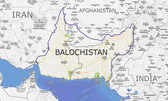
Balochistan, a region that stretches across Pakistan, Iran, and Afghanistan, is both geopolitically strategic and resource-rich. Known for its vast deserts, rugged mountains, and sparse population, Balochistan is home to the Baloch people, an ethnically distinct group with a long history of struggle for autonomy. While the Pakistani province of Balochistan is the most prominent part of this region, Baloch populations in Iran and Afghanistan also face challenges related to identity, rights, and self-determination. Today, Balochistan’s complex dynamics include separatist movements, major energy projects, and tensions fueled by regional powers, underscoring the intersection of local aspirations and global strategic interests.
Historical Context: Baloch Identity and Struggle for Autonomy
Balochistan’s history is marked by its distinctive ethnic and cultural identity. The Baloch people trace their origins to ancient tribes in the region, maintaining their own language, customs, and a tribal social structure that remains influential to this day. During British colonial rule, Balochistan was loosely governed as a frontier region, with parts administered by tribal leaders and others integrated into British India. When British India was partitioned in 1947, Pakistan annexed Balochistan despite local resistance, sparking early tensions over autonomy and self-governance.
Since Pakistan’s independence, Baloch nationalist movements have sought greater autonomy or outright independence, citing grievances over economic exploitation, political marginalization, and human rights abuses. The Pakistani government has repeatedly clashed with Baloch separatists, launching military operations in the 1970s, 2000s, and 2010s, with thousands of casualties and widespread displacement. The Baloch nationalist movement remains fragmented but resilient, with groups pursuing various degrees of autonomy, rights, and resistance against what they see as an extractive state.
Balochistan’s Resources: A Wealth of Natural Assets
Balochistan is endowed with vast natural resources, including natural gas, coal, gold, copper, and other valuable minerals. Pakistan’s largest gas fields, located in Sui, provide much of the country’s natural gas, yet the province itself sees little benefit. Despite its wealth, Balochistan remains one of the most impoverished and underdeveloped regions in Pakistan, with high poverty rates, low literacy levels, and limited infrastructure.
This disparity between wealth extraction and local development is a central grievance for Baloch nationalists, who argue that Balochistan’s resources are exploited to benefit other provinces, particularly Punjab. Meanwhile, local communities suffer from environmental degradation and a lack of economic opportunity, as most profits from resource extraction bypass them entirely. The region’s resource wealth has also attracted foreign interest, with companies from China, Canada, and other countries partnering with Pakistan to develop mining and energy projects, often in areas where security concerns are high.
The China-Pakistan Economic Corridor (CPEC): Economic Potential and Local Resistance
One of the most transformative projects in Balochistan is the China-Pakistan Economic Corridor (CPEC), a $62 billion initiative that connects China’s western Xinjiang region to the Arabian Sea through Pakistan. Gwadar, a port city in Balochistan, is the crown jewel of CPEC, envisioned as a major transit hub for Chinese goods and energy imports. For Pakistan, CPEC is a critical infrastructure project promising economic growth, job creation, and greater integration into global trade networks.
However, CPEC has faced significant opposition from Baloch nationalist groups, who view it as another example of exploitation without benefit to local populations. Many Baloch fear that CPEC will exacerbate the region’s economic inequalities, as large-scale infrastructure projects often bring in workers from other parts of Pakistan, leaving local residents with few employment opportunities. Moreover, Gwadar’s development has led to land acquisition that displaces local communities, sparking further resentment. In response, Baloch separatists have targeted CPEC infrastructure and Chinese workers, viewing both as symbols of foreign control over Balochistan’s future.
The Conflict in Balochistan: Insurgency, Human Rights, and State Response
The Balochistan conflict remains one of Pakistan’s longest-running and least reported internal struggles. Multiple armed groups, including the Baloch Liberation Army (BLA) and Baloch Republican Army (BRA), have engaged in a low-intensity insurgency against the Pakistani state, targeting security forces, government officials, and infrastructure projects. These groups demand greater autonomy, resource control, and recognition of Baloch identity, using guerrilla tactics to challenge state authority.
In response, Pakistan’s government has pursued a heavy-handed approach, deploying the military and intelligence agencies to suppress dissent. This counterinsurgency strategy has been marked by allegations of extrajudicial killings, enforced disappearances, and torture, with hundreds of activists, journalists, and students allegedly detained without trial. Human rights organizations have raised concerns about these tactics, accusing the Pakistani government of stifling free expression and suppressing Baloch voices. The human rights crisis in Balochistan remains largely underreported, yet it fuels the cycle of resistance and repression that perpetuates instability in the region.
The Geopolitical Dimension: Iran, Afghanistan, and Regional Power Dynamics
Balochistan’s location makes it strategically significant not only for Pakistan but also for neighboring Iran and Afghanistan. Each country hosts significant Baloch populations, and cross-border solidarity among Baloch communities creates security challenges for all three governments. Iran faces its own Baloch insurgency in its southeastern province of Sistan-Baluchestan, where Sunni Baloch minorities clash with Tehran over discrimination and repression. Iran’s security forces frequently crack down on suspected militants in the region, and Tehran has raised concerns over the potential for Baloch nationalist movements to spill over from Pakistan into Iranian territory.
Afghanistan’s Baloch population is smaller, but Afghanistan’s instability and proximity to Pakistan’s Balochistan have raised fears of cross-border militancy and smuggling. The porous border allows Baloch insurgents, arms, and narcotics to flow freely between the countries, challenging Pakistan’s counterinsurgency efforts. Both Pakistan and Iran have accused each other of harboring or tolerating insurgents, adding a layer of diplomatic tension to the already volatile region.
Meanwhile, foreign powers, including the United States and India, have taken an interest in Balochistan’s dynamics. India has occasionally voiced support for Baloch rights, a position that fuels suspicions within Pakistan of Indian interference. India’s growing relationship with Iran and interest in the nearby Chabahar port—an alternative trade route to Gwadar—adds to Pakistan’s concerns that Balochistan could become a battleground in regional rivalries.
The Quest for Development: Poverty, Health, and Education
Balochistan’s development indicators are among the lowest in Pakistan, with widespread poverty, poor health infrastructure, and low literacy rates. Much of the population lacks access to clean drinking water, electricity, and basic healthcare. Educational opportunities are limited, and the literacy rate, especially among women, is critically low. Despite the government’s promises of investment and development, many Baloch feel neglected, as funding for essential services often falls short or is redirected to military expenditures.
The economic and social marginalization of Balochistan fuels resentment, especially as the province’s resources generate substantial revenue for the state. Some government-backed initiatives, including infrastructure and vocational training programs, aim to address these disparities, but the lack of sustained investment in local communities has prevented meaningful change. Addressing Balochistan’s development needs requires a holistic approach that prioritizes education, healthcare, and economic empowerment over short-term security solutions.
Future Prospects: Towards Autonomy or Continued Tensions?
The future of Balochistan is uncertain, as calls for autonomy and resistance to state control persist. A political solution that recognizes Baloch grievances and addresses issues of resource allocation, political representation, and cultural rights could help build trust and mitigate conflict. However, the fragmented nature of the Baloch nationalist movement, combined with Pakistan’s focus on security, complicates prospects for a negotiated settlement.
A peaceful resolution requires a balance between development and self-governance, where local communities have a genuine stake in decision-making. Some analysts argue that giving Balochistan greater control over its resources and governance, akin to a federated model, could reduce tensions. Yet, Pakistan’s government has shown little willingness to compromise on national unity, seeing Baloch nationalism as a threat to state sovereignty.
At the same time, Balochistan’s stability is linked to regional dynamics, especially as Pakistan deepens ties with China through CPEC. If managed inclusively, these economic projects could provide opportunities for local employment and economic growth. However, without measures to ensure local participation and fair distribution of benefits, development initiatives risk further entrenching grievances.
Conclusion: A Region at the Crossroads of Conflict and Opportunity
Balochistan stands at a crossroads, caught between its quest for autonomy, its strategic value to regional powers, and its resource wealth. While the province’s economic potential is immense, decades of marginalization, conflict, and human rights abuses have left deep scars. For Pakistan, the challenge lies in addressing these grievances without undermining national unity or security. For the Baloch people, the fight is one for dignity, self-determination, and control over the resources that have too often been a source of conflict rather than prosperity.
As regional tensions and global interest in Balochistan’s resources grow, the world will be watching how Pakistan navigates the demands of development, security, and human rights in this complex region. A sustainable peace in Balochistan would not only stabilize Pakistan but could also serve as a model for addressing similar regional conflicts rooted in resource inequality and ethnic marginalization. A sustainable peace in Balochistan requires inclusive development that genuinely benefits local communities, a commitment to human rights, and meaningful autonomy that respects Baloch identity and aspirations.
If Pakistan can address these deep-seated grievances, Balochistan could transform from a region of instability into a thriving economic corridor linking South Asia, Central Asia, and the Middle East. But without efforts to bridge the divide between state interests and local demands, Balochistan may remain a flashpoint for conflict, shaped by resistance and resentment. The way forward will require courageous political solutions, regional cooperation, and a focus on the voices of Balochistan’s people, who remain central to the region’s future stability and prosperity.
 Apocalypse Now Threedux: World War Thr33
Leave a comment