Russia and Finland: A History of Tension, Resilience, and Geopolitical Maneuvering
Introduction
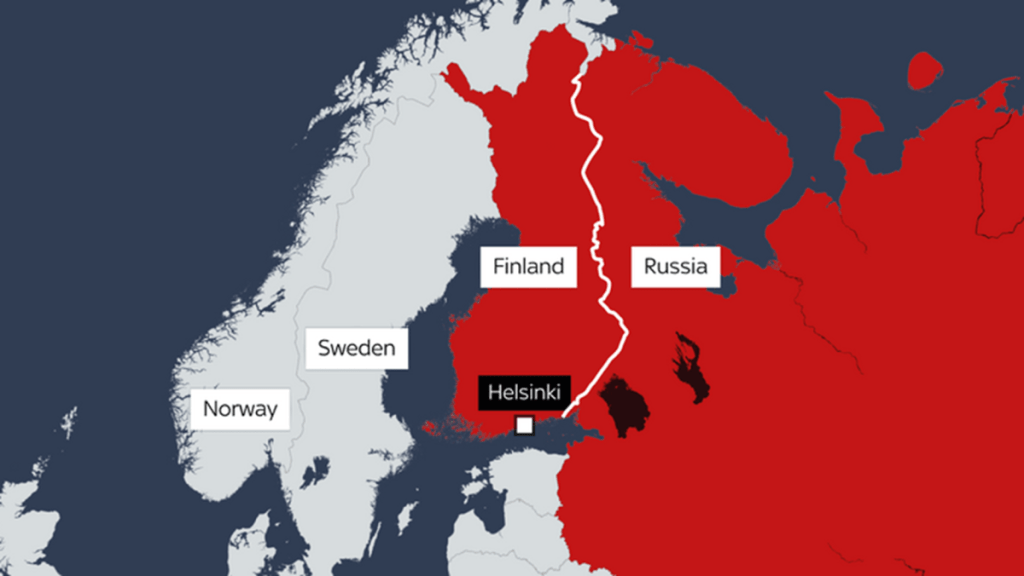
Russia and Finland share a 1,300-kilometer border and a complex history marked by conflict, coexistence, and careful diplomacy. From the Winter War to Finland’s Cold War balancing act, and now the ongoing shifts due to NATO expansion, Finland has navigated its relationship with Russia with remarkable resilience and adaptability. Finland’s geographic position places it in a unique role in European security, balancing its long-held principles of independence with a cautious approach to its powerful neighbor. The story of Russia and Finland reveals how a small nation on Europe’s edge has maintained its sovereignty in the shadow of a global superpower.
The Tsarist Era: Russian Influence and Finnish Autonomy (1809–1917)
Finland’s modern relationship with Russia began in 1809, when it became an autonomous Grand Duchy of the Russian Empire following the Finnish War between Sweden and Russia. While Finland maintained considerable autonomy and retained its own institutions, language, and customs, it operated under the authority of the Russian Tsar. This arrangement allowed Finland to develop a strong sense of national identity and culture, while also giving it unique privileges within the empire.
However, as Russian nationalism grew in the late 19th century, attempts were made to assimilate Finland into Russian society. Policies such as the “Russification” campaigns, which aimed to impose Russian language and administration on Finnish institutions, were met with resistance. The desire for greater independence intensified, and by the early 20th century, nationalist sentiments were at an all-time high. The Bolshevik Revolution in 1917 provided Finland with a historic opportunity, and on December 6, 1917, Finland declared its independence. The new Soviet government, weakened by internal strife, formally recognized Finland’s independence shortly thereafter.
The Winter War and Continuation War: Defending Independence (1939–1944)
In 1939, as World War II broke out, the Soviet Union sought to secure its borders by demanding territory from Finland, including control over strategic locations like the Karelian Isthmus and military access to Finnish islands. When Finland refused, the Soviet Union invaded, sparking the Winter War. Despite being vastly outnumbered and outgunned, Finnish forces mounted a tenacious resistance, using guerrilla tactics and taking advantage of the harsh winter terrain. The “sisu,” or determination, of the Finnish people became legendary as they inflicted heavy losses on Soviet troops.
After three months of fierce fighting, Finland and the Soviet Union signed the Moscow Peace Treaty in March 1940. Finland ceded 11% of its territory, including Karelia, but maintained its independence. However, the peace was short-lived. In 1941, when Nazi Germany invaded the Soviet Union, Finland saw an opportunity to reclaim its lost territories and aligned itself with Germany, leading to the Continuation War. Although Finland fought alongside German forces, it did not officially join the Axis powers. The war ended in 1944, with Finland again forced to cede territory but avoiding occupation and retaining its sovereignty.
The Cold War: Finlandization and Neutrality (1945–1991)
After World War II, Finland faced a delicate balancing act between the West and the Soviet Union. The 1948 Treaty of Friendship, Cooperation, and Mutual Assistance with the Soviet Union effectively established Finland’s policy of “Finlandization,” in which it pledged neutrality and avoided actions that could antagonize Moscow. Finland accepted limitations on its foreign policy, maintaining a careful neutrality to preserve its independence while economically and diplomatically cooperating with the Soviet Union.
This strategy enabled Finland to thrive economically and develop a unique form of “active neutrality.” Helsinki became a hub for East-West diplomacy, hosting summits such as the 1975 Conference on Security and Cooperation in Europe, which helped lay the foundation for the Organization for Security and Co-operation in Europe (OSCE). While Finland maintained strong cultural and economic ties with the West, its policy of Finlandization became an example of how small states could coexist with powerful neighbors without sacrificing autonomy.
Post-Cold War Era: Integration with the West
The collapse of the Soviet Union in 1991 fundamentally altered Finland’s geopolitical environment. Freed from the constraints of Finlandization, Finland pursued closer integration with Western institutions. In 1995, Finland joined the European Union, a significant step that aligned it with the West economically and politically, though it maintained its policy of military non-alignment.
Finland’s relationship with NATO became increasingly relevant as the alliance expanded eastward, bringing former Soviet bloc countries into its fold. While Finland participated in NATO’s Partnership for Peace program and cooperated with the alliance on various security initiatives, it stopped short of seeking full NATO membership. For years, Finnish leaders emphasized the importance of maintaining a balanced foreign policy, cultivating good relations with Russia while strengthening ties with Europe and the United States.
However, Finland continued to monitor Russian actions closely, mindful of the events in Chechnya, Georgia, and Ukraine. These conflicts demonstrated Russia’s willingness to exert force within its perceived sphere of influence, reinforcing Finland’s commitment to a robust defense policy and national resilience.
The Ukraine Crisis and the Shift Toward NATO (2014–Present)
Russia’s annexation of Crimea in 2014 was a turning point for Finnish security policy. Public support for NATO membership rose, though it remained a contentious issue. Finland responded by increasing defense spending, modernizing its military, and enhancing its cooperation with NATO, Sweden, and other EU countries. The Finnish government also strengthened its cybersecurity and defense capabilities, anticipating the possibility of hybrid warfare tactics.
The Russian invasion of Ukraine in February 2022 profoundly affected Finland’s security calculus. The invasion shattered assumptions about European security, leading Finland to reconsider its policy of military non-alignment. Within months, public opinion in Finland shifted dramatically, with a majority of Finns supporting NATO membership. In May 2022, Finland and Sweden jointly applied for NATO membership, a historic decision reflecting their shared concerns over Russian aggression. NATO’s acceptance of Finland (and, later, Sweden) represented a significant strategic shift, signaling that Finland no longer saw neutrality as a viable means of ensuring security against potential Russian threats.
Border Security and Military Readiness
Finland’s accession to NATO has strengthened the alliance’s northern flank, adding a well-prepared military force that has long prioritized defense capabilities. Finland maintains a policy of universal conscription, which has given it one of Europe’s most capable reserve forces. The Finnish Armed Forces have extensive experience operating in the rugged, forested terrain along the Russian border, making Finland a valuable asset for NATO’s defensive strategy in Northern Europe.
As a NATO member, Finland has invested in further securing its eastern border. It has increased surveillance, fortified border infrastructure, and collaborated closely with NATO on joint exercises. This heightened focus on border security reflects Finland’s longstanding emphasis on resilience and preparedness, values deeply rooted in its history of defending independence against Russia.
Russia’s Response and the New Geopolitical Reality
Russia’s reaction to Finland’s NATO accession has been predictably critical, with Russian officials warning of “consequences” and denouncing NATO’s encroachment on its borders. However, while Russia has strengthened its military presence in the Arctic and increased patrols near Finnish waters, its response has been measured, likely tempered by its military commitments in Ukraine.
Finland’s move into NATO reshapes the security landscape of Northern Europe, complicating Russia’s strategic calculus in the Baltic Sea and Arctic regions. Finland’s NATO membership, alongside Sweden’s, effectively turns the Baltic Sea into a NATO-dominated zone, limiting Russia’s access and strengthening Western cohesion. The development underscores a shift in Europe’s defense architecture, driven by a renewed focus on deterring Russian aggression.
Conclusion: Resilience and the Future of Finland-Russia Relations
The story of Russia and Finland is one of resilience and adaptation, with Finland consistently finding ways to preserve its independence despite Russian pressure. From the Winter War to Finlandization, and now as a NATO member, Finland has shown that small states can maintain sovereignty even while navigating complex relationships with larger neighbors. Finland’s careful diplomacy, robust defense policy, and commitment to national resilience have enabled it to balance autonomy with security, a strategy that has now culminated in its decision to join NATO.
While Finland’s membership in NATO marks a new chapter in its relations with Russia, the country’s approach is unlikely to become aggressively confrontational. Instead, Finland will likely continue to emphasize stability, deterrence, and defense, using its position within NATO to ensure its security without provoking unnecessary escalation.
As global tensions rise and Europe reconsiders its security priorities, Finland’s journey from a neutral state to a NATO ally exemplifies how nations can adapt to shifting geopolitical realities while remaining true to their core values. Finland’s resilience in the face of Russian pressure serves as both an inspiration and a strategic example, reminding the world of the strength that small nations can wield when they act with unity and resolve.
 Apocalypse Now Threedux: World War Thr33
Leave a comment