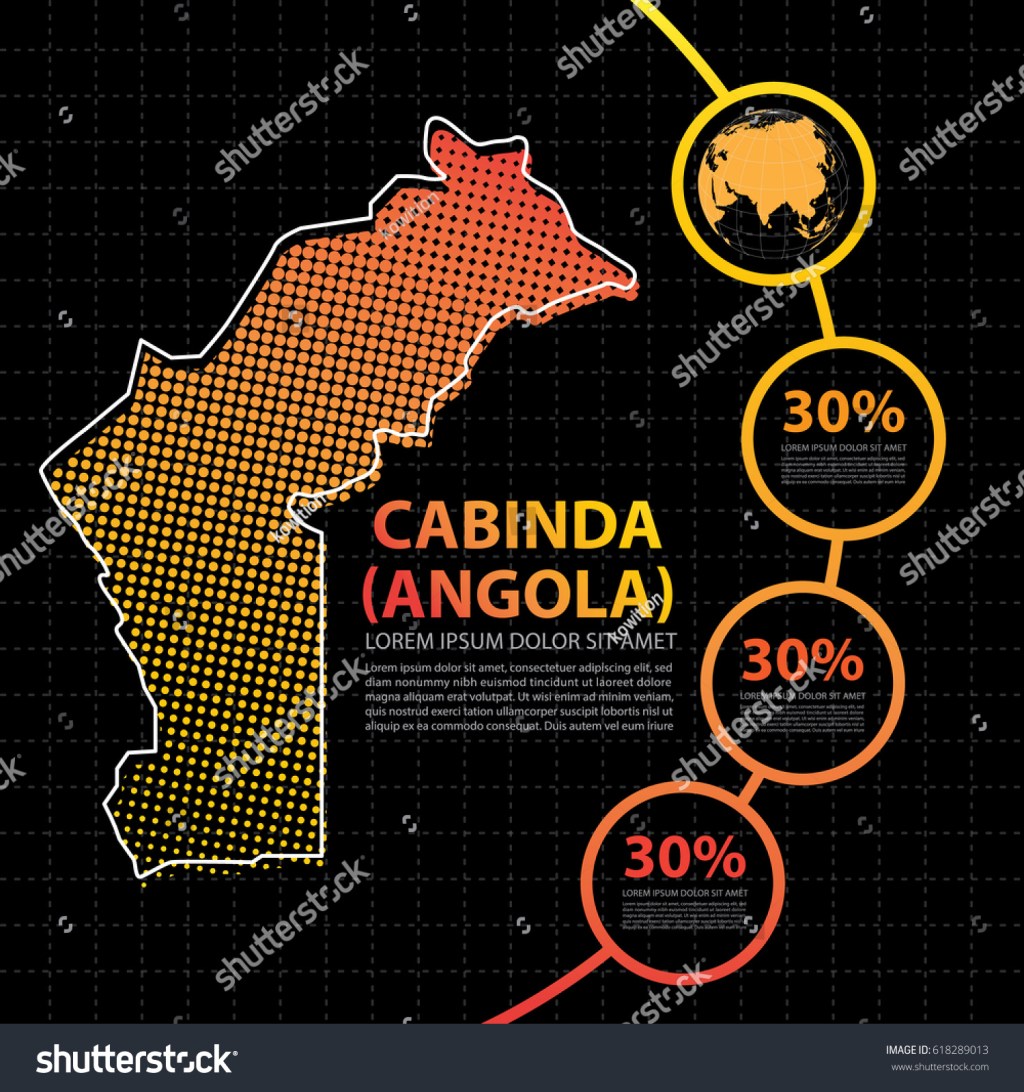
Cabinda: Angola’s Forgotten Conflict and the Quest for Autonomy
Introduction
Cabinda, an oil-rich enclave separated from mainland Angola by the Democratic Republic of Congo (DRC), is a region often overlooked in discussions about African conflicts and independence movements. Known for its abundant natural resources and lush rainforests, Cabinda is also a land marked by decades of unrest, as local groups seek autonomy or outright independence from Angola. While Angola’s economy depends heavily on Cabinda’s oil production, Cabindans often feel sidelined, their wealth flowing out while poverty, marginalization, and repression persist at home. As Cabinda remains a simmering conflict zone, the region highlights the complexities of post-colonial borders, resource wealth, and the struggle for self-determination.
Historical Background: Cabinda’s Unique Status
The roots of Cabinda’s conflict lie in its distinct historical and colonial background. Originally a Portuguese protectorate separate from Angola, Cabinda was administered independently until the mid-20th century. Cabinda’s uniqueness stems from its history as part of three separate kingdoms—the Kakongo, Loango, and Ngoyo—each with strong ties to the Congo region. In 1885, the Treaty of Simulambuco established Cabinda as a protectorate under Portuguese sovereignty, which local leaders understood as a unique status, distinct from Portuguese Angola.
When Angola gained independence from Portugal in 1975 after a long anti-colonial struggle, the newly formed government, led by the Popular Movement for the Liberation of Angola (MPLA), annexed Cabinda, integrating it as part of Angola. However, Cabindan leaders claimed that the region’s unique colonial history entitled it to a separate path toward independence. This perceived annexation ignited tensions that evolved into an armed struggle for independence and autonomy, led by groups like the Front for the Liberation of the Enclave of Cabinda (FLEC).
The Fight for Independence: FLEC and the Armed Insurgency
The Front for the Liberation of the Enclave of Cabinda (FLEC) emerged in the 1960s, advocating for Cabindan independence from both Portugal and later, Angola. Since Angola’s annexation of Cabinda, FLEC has splintered into various factions, but the goal remains consistent—seeking either autonomy or full independence for Cabinda. Although Angola’s military, known as the Armed Forces for the Liberation of Angola (FAA), has launched repeated operations to crush FLEC, the group has continued its low-intensity insurgency, carrying out attacks against Angolan forces, infrastructure, and oil installations.
The Angolan government has employed a heavy-handed approach to suppress the insurgency, deploying significant military resources to the region and establishing a tight security presence. This militarization has led to allegations of human rights abuses, with reports of arbitrary arrests, torture, and extrajudicial killings targeting Cabindan activists and civilians. The cycle of repression and resistance has fostered an atmosphere of distrust, with many Cabindans seeing the government as an occupying force rather than a legitimate authority.
Cabinda’s Oil Wealth: A Double-Edged Sword
Cabinda’s significance to Angola’s economy lies in its vast oil reserves, which account for roughly 60% of Angola’s oil production, making Angola one of Africa’s top oil exporters. Major international companies, including Chevron and Total, operate oil fields off Cabinda’s coast, generating billions of dollars in revenue. However, while Cabinda’s oil wealth fuels Angola’s national economy, little of that wealth finds its way back to Cabindan communities. The region suffers from high poverty rates, inadequate infrastructure, and limited public services, creating a stark contrast between the wealth generated offshore and the poverty onshore.
This economic disparity is a core grievance for Cabindan separatists, who argue that Cabinda’s resources are being exploited to benefit Angola’s elite, particularly in Luanda, the capital. Many Cabindans see the government’s interest in the region as purely extractive, deepening their resentment and fueling calls for greater autonomy or independence. Efforts to address this disparity, such as the 2006 Cabinda Peace Accord, which promised increased investment and autonomy for Cabinda, have largely failed to materialize, further entrenching disillusionment among Cabindans.
The 2006 Cabinda Peace Accord: Promise and Disappointment
In 2006, Angola and a faction of FLEC signed the Cabinda Peace Accord, an agreement that aimed to end the conflict by granting Cabinda special economic and administrative status within Angola. The accord promised greater investment in local infrastructure, job creation, and a share of the region’s oil revenues. However, implementation has been uneven and criticized for failing to deliver meaningful autonomy or economic benefits to the people of Cabinda.
While the Angolan government claims the peace process is a success, many Cabindans view the accord as ineffective, with limited improvements to local governance and little economic relief for ordinary citizens. FLEC factions that did not sign the accord, as well as other civil society groups, continue to call for true self-determination, arguing that the agreement only served to entrench Angolan control over the region’s resources without addressing local needs.
Human Rights and Civil Liberties: Repression and Resistance
The Angolan government’s response to dissent in Cabinda has included crackdowns on activists, journalists, and community leaders who advocate for greater rights or independence. Human rights organizations have documented numerous abuses, including arbitrary arrests, forced disappearances, and restrictions on freedom of assembly and expression. Security forces are frequently accused of targeting not only suspected FLEC members but also civilians, creating an atmosphere of fear and repression.
These repressive tactics have led to a culture of silence in Cabinda, where open discussion of independence or autonomy can be dangerous. Activists face harassment, and journalists who report on the situation risk detention. The government’s tight control over information and restrictions on media access mean that the conflict in Cabinda remains relatively underreported, with limited international awareness of the human rights issues facing the region.
The Geopolitical Dimension: Regional and Global Interests
Cabinda’s location on the Atlantic coast and its oil wealth give it strategic significance beyond Angola’s borders. The region’s conflict has drawn interest from neighboring Congo and regional powers wary of separatist movements. However, international involvement has been limited, as foreign governments and international bodies are hesitant to challenge Angola’s sovereignty over Cabinda, particularly given Angola’s role as a major oil producer in Africa and its close ties to China and other powerful allies.
International oil companies operating in Cabinda face their own challenges, balancing their investments with the risks of insecurity. These companies have largely refrained from engaging in local politics, focusing instead on maintaining security arrangements to protect their operations. However, the presence of foreign oil interests has added another layer of complexity to the conflict, as local communities increasingly view these companies as complicit in their economic marginalization.
Future Prospects: Autonomy, Independence, or Integration?
The future of Cabinda remains uncertain, as the region grapples with competing visions of autonomy, independence, and integration with Angola. While the Angolan government shows little willingness to entertain full independence for Cabinda, there may be room for negotiating greater regional autonomy, particularly if international actors or civil society groups push for meaningful reforms. Greater autonomy could include more local governance, a larger share of resource revenues, and the establishment of infrastructure that benefits Cabindans directly.
However, achieving a peaceful resolution will require addressing the root causes of discontent, including economic inequality, political marginalization, and human rights abuses. Without tangible improvements, Cabinda’s separatist sentiment will likely persist, and the Angolan government’s heavy-handed approach may only fuel further resistance. A lasting peace will require dialogue and concessions that go beyond military control, focusing on building trust and empowering Cabindans to participate meaningfully in their own governance.
Conclusion: Cabinda as a Case Study in Resource Conflict and Marginalization
Cabinda is a region of immense potential and profound challenges, emblematic of the struggles faced by resource-rich but marginalized regions worldwide. Its conflict highlights the difficulties of balancing national unity with local self-determination, especially when economic wealth is at stake. For Angola, Cabinda’s oil is essential, yet the country’s reliance on an extractive approach to governance has fueled the very resistance it seeks to quell.
As Angola seeks stability and economic growth, addressing the grievances of the Cabindan people is not only a moral imperative but also a strategic necessity. The future of Cabinda will depend on Angola’s willingness to reimagine its relationship with the region, moving beyond repression to establish a model of governance that respects Cabinda’s unique identity, shares its resources equitably, and fosters sustainable peace. In doing so, Angola could transform Cabinda from a site of conflict into a beacon of reconciliation and regional cooperation, setting a precedent for managing resource wealth in a way that benefits all.
 Apocalypse Now Threedux: World War Thr33
Leave a comment