Yemen: A Nation Torn by War, Humanitarian Crisis, and Global Geopolitics
Introduction
Yemen’s story is one of beauty and tragedy, a land with a rich cultural heritage that has been devastated by years of conflict, poverty, and foreign intervention. What began as a struggle for political control has spiraled into a brutal proxy war, pulling in regional powers and leaving millions of Yemenis caught in one of the world’s worst humanitarian crises. Today, Yemen is more than a battleground; it is a case study in the complex interplay of local grievances, regional ambitions, and international indifference. Understanding the conflict in Yemen requires looking at the internal divisions that have driven it, the outside forces that fuel it, and the human cost that continues to mount with each passing day.
Historical Context: A Divided Past (1960s–1990s)
Yemen’s modern history is marked by division and turbulence. The country was split into two states for much of the 20th century: North Yemen, which gained independence from the Ottoman Empire, and South Yemen, a former British protectorate that became a Marxist state in 1967. This division fueled different political ideologies, economies, and social structures, with North Yemen remaining more tribal and conservative, while South Yemen aligned with Soviet-style socialism.
In 1990, the two Yemens unified, forming the Republic of Yemen under President Ali Abdullah Saleh. However, unification did not erase the underlying political, social, and regional divisions. A civil war in 1994 underscored these tensions, as southern leaders attempted to secede but were defeated. Despite the appearance of a united state, Yemen’s unity remained fragile, and grievances among various groups continued to simmer beneath the surface, setting the stage for future instability.
The Rise of the Houthi Movement: Origins and Grievances
The Houthi movement, officially known as Ansar Allah, originated in the 1990s in northern Yemen among the Zaydi Shia population, a religious minority in Yemen but dominant in the north. Named after their leader, Hussein Badreddin al-Houthi, the Houthis initially emerged as a cultural and religious revivalist group resisting perceived marginalization and Saudi influence. Over time, the movement adopted a more militant stance, advocating for regional autonomy and opposing the central government’s close ties with the United States and Saudi Arabia.
By the early 2000s, clashes between the Yemeni government and the Houthis escalated into a series of localized wars. The Houthis’ grievances included underdevelopment, poverty, and a lack of political representation, issues that resonated with many Yemenis beyond their religious base. These tensions would later become a catalyst for the larger conflict that erupted in 2014.
The Arab Spring and Yemen’s Political Crisis (2011)
In 2011, inspired by the Arab Spring, Yemenis took to the streets to protest President Saleh’s authoritarian rule, demanding democratic reforms and an end to corruption. The protests gained momentum, and under growing pressure, Saleh agreed to step down in 2012 in exchange for immunity. His departure marked the end of over three decades of rule but left a power vacuum that Yemen’s fragile institutions struggled to fill.
Abdrabbuh Mansur Hadi, Saleh’s vice president, assumed power as part of a transition deal brokered by the Gulf Cooperation Council (GCC) and supported by the United Nations. However, Hadi’s government faced numerous challenges, including a faltering economy, tribal conflicts, and the growing influence of the Houthis. Many Yemenis felt that the transitional government failed to address their needs, and discontent continued to grow.
The Houthi Takeover and the Outbreak of War (2014–2015)
In 2014, the Houthis, capitalizing on widespread frustration with the government, began a march from their northern stronghold, eventually capturing the capital, Sanaa. By early 2015, the Houthis had ousted President Hadi, who fled to Saudi Arabia. The rapid Houthi advance alarmed Saudi Arabia, which viewed the group as an Iranian proxy, exacerbating sectarian tensions and regional rivalries.
In March 2015, Saudi Arabia formed a coalition of Arab states and launched a military intervention, Operation Decisive Storm, aimed at restoring Hadi’s government and countering what it saw as Iranian influence in Yemen. The coalition, backed by the United States and several Western allies, initiated airstrikes against Houthi-held areas, marking the beginning of a brutal and prolonged conflict.
A Regional Proxy War: Saudi Arabia vs. Iran
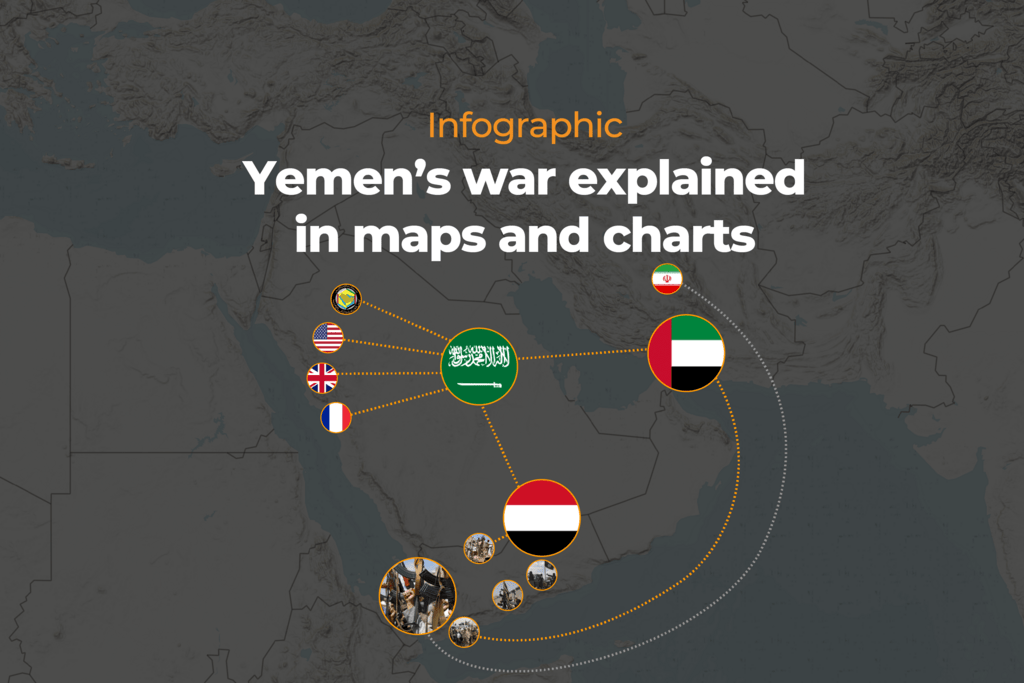
The Yemen war quickly evolved into a proxy conflict between regional powers. Saudi Arabia and its allies saw the Houthis as an extension of Iranian influence on their southern border, while Iran saw an opportunity to counterbalance Saudi power by supporting the Houthis politically, and reportedly with arms and funding. This sectarian framing of the conflict, with Sunni Saudi Arabia opposing Shia-aligned Houthis, has fueled a broader power struggle between Riyadh and Tehran.
Although Iran’s support for the Houthis is limited compared to Saudi Arabia’s extensive military campaign, the perception of Iranian involvement has driven Saudi Arabia’s actions and intensified the conflict. The war has become a geopolitical battleground for Saudi-Iranian rivalry, overshadowing Yemen’s internal grievances and turning the country into a pawn in a larger regional struggle.
The Humanitarian Crisis: A Catastrophe Unfolds
Yemen’s conflict has led to one of the world’s worst humanitarian crises, with widespread famine, disease, and displacement. According to the United Nations, over 24 million Yemenis—about 80% of the population—are in need of humanitarian assistance. The war has devastated infrastructure, including hospitals, schools, and sanitation systems, exacerbating the country’s poverty and making it nearly impossible for civilians to access essential services.
The Saudi-led coalition’s blockade of Yemeni ports, intended to prevent arms smuggling, has severely restricted the flow of food, fuel, and medicine, leading to widespread malnutrition and preventable deaths. The Houthis have also been accused of obstructing aid and using resources to support their war effort, further compounding the suffering of ordinary Yemenis. Meanwhile, diseases like cholera and COVID-19 have spread unchecked, overwhelming the country’s crippled healthcare system and pushing millions to the brink.
Fragmentation and Factions: A Complex Web of Alliances
Yemen’s war is not a straightforward binary conflict but a multi-layered struggle involving various factions and shifting alliances. Beyond the Houthis and the Saudi-led coalition, local militias, tribal groups, and extremist organizations such as Al-Qaeda in the Arabian Peninsula (AQAP) and ISIS operate within Yemen, exploiting the chaos to expand their influence.
One key player is the Southern Transitional Council (STC), a separatist group backed by the United Arab Emirates that seeks independence for South Yemen. Although initially allied with the coalition against the Houthis, the STC has clashed with Hadi’s forces, further fragmenting the anti-Houthi bloc and complicating efforts to form a unified front. This complex web of alliances and rivalries underscores the difficulty of achieving peace in Yemen, where multiple groups vie for power, often with competing agendas.
International Involvement and the Struggle for Peace
Efforts to broker peace in Yemen have been led by the United Nations, with multiple rounds of negotiations taking place over the years, most notably in Kuwait and Stockholm. In 2018, the Stockholm Agreement was signed, resulting in a fragile ceasefire around the port city of Hodeidah, a vital entry point for humanitarian aid. However, the agreement has struggled to hold, and violations are frequent, as mistrust between the warring sides runs deep.
The Biden administration in the United States announced in 2021 an end to U.S. support for Saudi-led “offensive operations” in Yemen, and there has been increased international pressure on all parties to end the conflict. However, peace remains elusive, as each faction remains wary of relinquishing control, and regional powers continue to see Yemen as a strategic battleground.
Yemen’s Future: Rebuilding a Shattered Nation
The road to peace in Yemen is fraught with challenges. Even if a ceasefire is achieved, the task of rebuilding Yemen is monumental. The war has left the country economically devastated, with entire cities in ruins and generations of Yemenis traumatized by violence and displacement. Yemen’s youth, in particular, face an uncertain future, having grown up amid war with limited access to education and opportunity.
To move forward, Yemen needs a political solution that addresses the grievances of its diverse regions and factions. This requires not only a peace deal among the primary warring parties but also an inclusive process that involves local tribes, women, civil society, and youth—groups often sidelined in formal negotiations. Sustainable peace will also depend on the withdrawal of foreign forces and a commitment from regional powers to support Yemen’s sovereignty rather than use it as a proxy battleground.
Conclusion: Yemen’s Enduring Resilience
The war in Yemen stands as a stark reminder of the costs of neglect, geopolitical rivalry, and indifference. Yemen’s people have endured years of hardship, but their resilience is undeniable. From the bustling markets of Sanaa to the resilience of families in rural villages, Yemen’s rich culture and heritage persist even amid conflict.
Yet, Yemen cannot rebuild on resilience alone. The country’s future depends on an international commitment to peace, accountability, and development. Yemen’s conflict is a story of both tragedy and tenacity—a nation fractured by war but unbroken in spirit. For Yemenis, peace is not merely an aspiration; it is a lifeline. The world must decide whether it will continue to watch from the sidelines or take concrete action to help one of the oldest civilizations
 Apocalypse Now Threedux: World War Thr33
Leave a comment