Unfinished Peace: The Kosovo Conflict and Its Lasting Legacy
Introduction
Nestled in the Balkans, Kosovo is a place where ancient history and modern politics collide. Its story is one of tragedy and endurance, a struggle for identity and sovereignty marred by violence, displacement, and international intervention. The Kosovo conflict not only reshaped the Balkans but also tested the world’s commitment to human rights and set new precedents for intervention. Today, over 20 years after the guns fell silent, Kosovo’s independence remains contested, its peace fragile, and its future uncertain.
A History of Ethnic Tensions: Roots of the Conflict
The roots of the Kosovo conflict are embedded in the Balkans’ complex mosaic of ethnic and religious identities. For centuries, Kosovo has been home to ethnic Albanians, who are predominantly Muslim, and Serbs, who are Orthodox Christians. This land holds deep significance for both groups: for Serbs, Kosovo is the heart of their medieval kingdom and the site of the historic Battle of Kosovo in 1389, a key moment in Serbian history. For Kosovar Albanians, it is their ancestral homeland and the center of their cultural and national identity.
Under Ottoman rule (1389–1912), Kosovo’s population became predominantly Albanian. However, as the Ottoman Empire crumbled, Serbian influence over the region grew. Kosovo was absorbed into Serbia, and later became part of Yugoslavia, where ethnic tensions simmered under authoritarian rule. For much of the 20th century, Kosovo Albanians faced discrimination, economic marginalization, and efforts to dilute their cultural identity. These tensions lay dormant but would resurface with explosive consequences as Yugoslavia began to disintegrate.
The Rise of Nationalism and the Yugoslav Collapse (1980s-1990s)
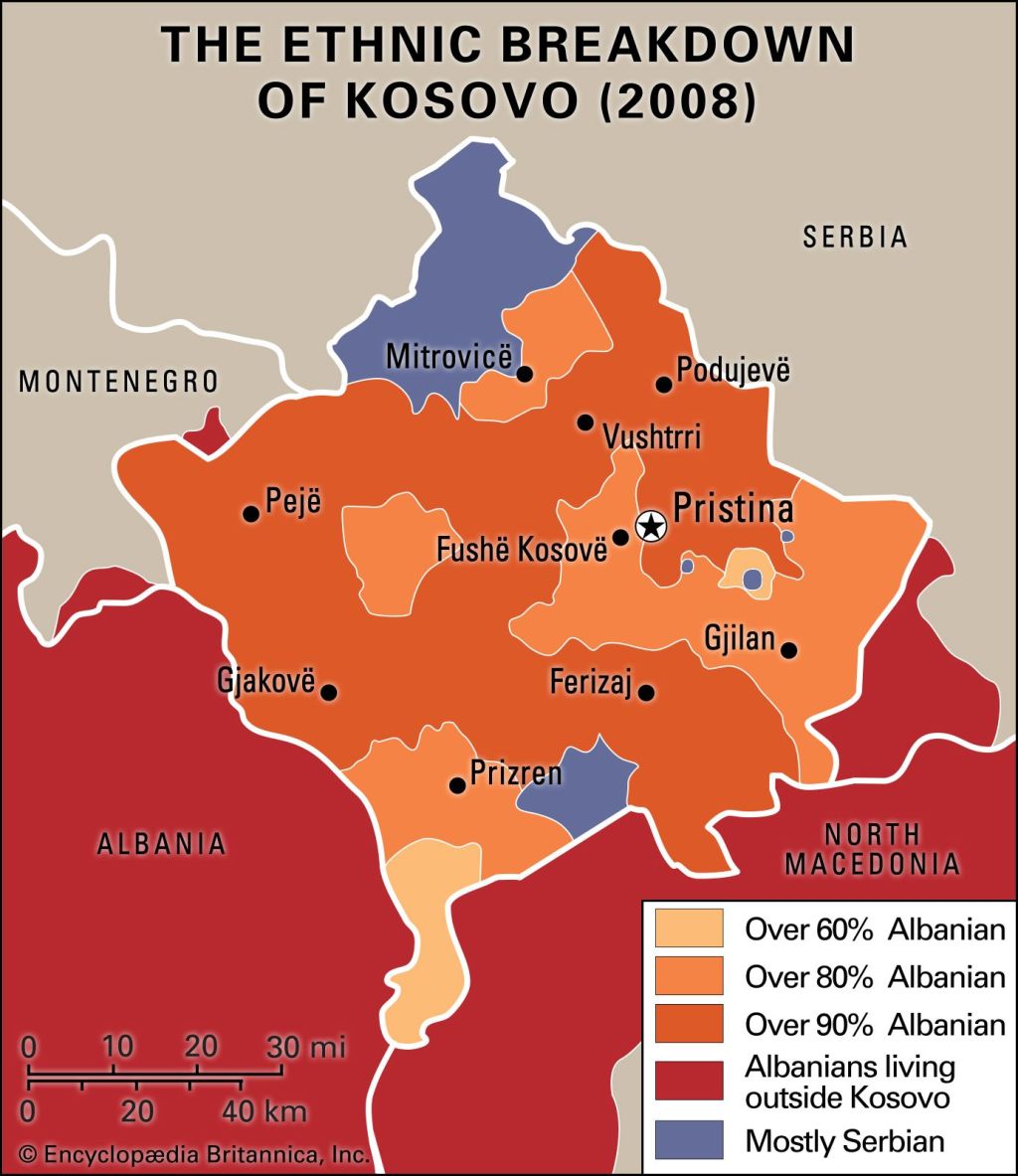
By the 1980s, ethnic nationalism was rising across Yugoslavia. In Kosovo, this took the form of increased demands for autonomy by ethnic Albanians, who comprised over 90% of the population. In 1989, Serbian leader Slobodan Milosevic revoked Kosovo’s autonomous status, bringing the region under direct Serbian control. This move sparked outrage among Kosovo Albanians, who were subjected to job discrimination, cultural repression, and police brutality under Milosevic’s rule.
The collapse of Yugoslavia in the early 1990s unleashed a wave of ethnic conflicts across the Balkans. While Croatia and Bosnia plunged into brutal wars, Kosovo remained under Serbian control, but tensions were rising. Kosovo’s Albanian population, led by Ibrahim Rugova and the Democratic League of Kosovo, adopted a strategy of nonviolent resistance, hoping that international support would pressure Serbia to restore autonomy. Yet, as the world’s attention focused on Bosnia, Kosovo’s plight went largely ignored, forcing some to take matters into their own hands.
The Kosovo Liberation Army and the Path to War (1996-1998)
Frustrated by the lack of progress, a militant faction emerged in the mid-1990s—the Kosovo Liberation Army (KLA). Composed mainly of young ethnic Albanians, the KLA sought independence through armed resistance, launching attacks on Serbian police and military targets. Serbia responded with a brutal crackdown, deploying the Yugoslav army and paramilitary units to root out the KLA and suppress any Albanian uprising. Villages were burned, civilians were targeted, and mass arrests became routine.
By 1998, the conflict had escalated into an all-out war between the KLA and Serbian forces. Images of burned villages and displaced civilians flooded the media, drawing the world’s attention to the worsening humanitarian crisis. The violence threatened to destabilize the entire Balkan region, and as civilian casualties mounted, the international community began to take notice. But diplomacy had failed to sway Milosevic, and pressure for intervention grew.
NATO’s Intervention: Operation Allied Force (1999)
With diplomatic efforts stalling and the death toll rising, NATO decided to take action. In March 1999, NATO launched Operation Allied Force, a 78-day bombing campaign aimed at halting the Serbian crackdown in Kosovo. For NATO, this intervention was about preventing ethnic cleansing and establishing a precedent for humanitarian intervention. For Serbia, it was an infringement on national sovereignty. The bombings targeted Serbian military positions, infrastructure, and supply lines, crippling Serbia’s ability to wage war in Kosovo but also impacting civilians and leading to widespread destruction.
The intervention was controversial. While NATO argued it was necessary to stop ethnic cleansing, critics pointed out that it bypassed the United Nations, setting a precedent for future interventions without international consensus. Nonetheless, by June 1999, Milosevic agreed to withdraw Serbian forces from Kosovo, ending the conflict. NATO troops and UN peacekeepers entered Kosovo, tasked with maintaining order and facilitating the return of refugees.
The Aftermath: Kosovo’s Uncertain Peace and the Road to Independence
After the war, Kosovo was placed under United Nations administration, but the scars of conflict were far from healed. Serbian forces had withdrawn, but the KLA soon turned its focus toward the Serbian minority within Kosovo, leading to revenge attacks, forced displacements, and a tense environment for those left behind. The international community, faced with an unstable Kosovo and an unresolved question of sovereignty, struggled to balance the aspirations of Kosovo’s Albanians with the rights of its Serbian minority.
In 2008, after nearly a decade of UN administration and failed negotiations, Kosovo declared independence. For the Albanian majority, it was a long-awaited realization of self-determination; for Serbia, it was an intolerable loss of territory and national pride. The declaration divided the world: the United States and most European Union countries recognized Kosovo, but Serbia, along with Russia, China, and several other nations, refused to do so. Today, Kosovo remains in a diplomatic limbo, recognized by over 100 countries but still denied a seat at the United Nations.
Ethnic Divisions and Economic Struggles in Modern Kosovo
In the years since its declaration of independence, Kosovo has struggled with both political and economic challenges. Ethnic tensions remain high, particularly in northern Kosovo, where a sizable Serbian population still identifies with Serbia and resists Pristina’s authority. This region remains a flashpoint, with occasional clashes, protests, and barricades highlighting the fragile nature of Kosovo’s peace.
Economically, Kosovo faces significant hardships, with high unemployment, limited foreign investment, and a heavy reliance on international aid. Youth unemployment is especially severe, driving young Kosovars to emigrate in search of better opportunities. Corruption and political instability have further hindered Kosovo’s development, creating frustration among its citizens who feel the promises of independence have yet to be fulfilled.
The Role of International Powers: Serbia, Russia, the EU, and the U.S.
The Kosovo conflict remains entangled in global geopolitics. For Serbia, Kosovo is an inseparable part of its national identity, and Belgrade has refused to recognize its independence. Backed by Russia—a key ally on the UN Security Council—Serbia has blocked Kosovo’s entry into international organizations, including the UN. Russia, facing its own territorial disputes, sees Kosovo’s situation as a precedent it must oppose to protect its own interests, particularly in Crimea and eastern Ukraine.
In contrast, the United States and the European Union have been staunch supporters of Kosovo’s independence. The EU has tried to mediate between Kosovo and Serbia, offering economic incentives and the promise of EU membership to encourage dialogue. However, progress has been slow, with both sides reluctant to make concessions. The U.S., which led NATO’s intervention, remains a strong ally to Kosovo, but Washington’s influence has limits in a region complicated by European and Russian interests.
An Unresolved Dispute: The Search for Lasting Peace
Efforts to normalize relations between Kosovo and Serbia have seen some incremental progress, with both parties signing agreements aimed at easing tensions and allowing greater movement of people and goods. However, a comprehensive peace deal remains elusive. Kosovo insists on full international recognition and sovereignty, while Serbia demands concessions that would grant autonomy to Serb-majority areas in Kosovo—an arrangement that Kosovo fears could weaken its statehood.
The EU-sponsored talks have faltered, and political dynamics in both countries make compromise difficult. Nationalist sentiments run high, with leaders on both sides facing domestic pressure to take a hardline stance. Each minor incident—whether a protest in northern Kosovo, a symbolic act by Serbia, or nationalist rhetoric from either side—threatens to derail years of careful diplomacy.
Conclusion: Kosovo’s Uncertain Path Forward
The Kosovo conflict is a reminder of how deeply divisions can run and how challenging it is to achieve reconciliation in the wake of war. For Kosovo, the road to independence has been marred by sacrifice, struggle, and a painful legacy of ethnic conflict. Today, its people are torn between the hope for a stable, prosperous future and the lingering shadows of unresolved tensions.
As Kosovo continues its journey, its fate remains tied to the broader politics of the Balkans and the influence of powerful allies and adversaries. The young nation’s future hinges on delicate diplomacy, internal reform, and a cautious optimism that peace, however elusive, is still within reach. The world watches, aware that Kosovo’s path forward is not just about one country’s destiny but about the ongoing experiment of international intervention, sovereignty, and the quest for peace in a fractured world.
 Apocalypse Now Threedux: World War Thr33
Leave a comment