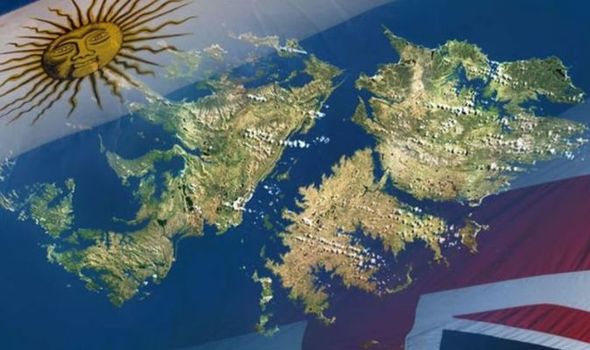
Argentina vs. the United Kingdom: The Falklands Conflict and a Longstanding Dispute
Introduction
The conflict between Argentina and the United Kingdom over the Falkland Islands (known as “Islas Malvinas” in Argentina) is one of the most enduring territorial disputes of modern times. Situated in the South Atlantic, these remote islands are home to fewer than 3,500 people but have become a symbol of national pride and sovereignty for both Argentina and the UK. The dispute has involved colonial claims, a brief but intense war in 1982, and decades of tense diplomacy. For Argentina, the Falklands represent a lost piece of national territory, while for the UK, they are a self-governing British Overseas Territory. Despite numerous diplomatic efforts, the dispute remains unresolved, leaving the islands a geopolitical flashpoint in the South Atlantic.
Colonial Roots of the Dispute: Early Claims and Settlement (18th–19th Centuries)
The history of the Falklands dispute dates back to the colonial era, with competing claims by Britain, France, and Spain. The French established the first settlement in 1764, only to cede the islands to Spain three years later. Meanwhile, Britain claimed sovereignty and established a presence on a neighboring island in 1765. The Spanish and British claims overlapped, leading to friction between the colonial powers. By 1811, both Spain and Britain had abandoned their settlements, leaving the islands largely uninhabited.
After Argentina gained independence from Spain in 1816, it declared sovereignty over the Falklands, inheriting Spain’s former territorial claims. In 1829, Argentina established a settlement on the islands, but in 1833, British forces arrived and reasserted British control, expelling Argentine authorities. Since that moment, Argentina has considered the British occupation an act of colonialism and continues to claim the islands as Argentine territory. The UK, however, has maintained uninterrupted control over the Falklands since then, asserting that the islanders overwhelmingly identify as British.
National Identity and Sovereignty: The Falklands as a Symbol for Argentina
For Argentina, the Falklands are a matter of national pride and sovereignty. Known as “Las Malvinas,” the islands are woven into Argentina’s identity, with generations raised on the belief that the territory rightfully belongs to them. The Argentine government has consistently maintained that the islands were taken by force and that the UK’s control is a remnant of colonialism that disregards Argentina’s territorial integrity. The Falklands issue remains central to Argentine foreign policy and is taught in schools, commemorated in national holidays, and discussed in political discourse.
For the UK, the Falklands are a British Overseas Territory, where the residents—most of whom have British ancestry—have consistently expressed their desire to remain under British sovereignty. For Britain, the self-determination of the Falklanders is paramount, making any negotiations over sovereignty a sensitive issue.
The 1982 Falklands War: A Brief but Intense Conflict
By the early 1980s, Argentina was under a military dictatorship facing mounting domestic unrest due to human rights abuses and economic struggles. The junta, led by General Leopoldo Galtieri, sought to bolster national unity and distract from internal issues by reclaiming the Falklands. In April 1982, Argentine forces invaded and occupied the islands, believing that Britain would not respond with military force given the distance and cost involved.
However, the British government, led by Prime Minister Margaret Thatcher, responded decisively. Within days, a naval task force was deployed to the South Atlantic to retake the islands. The war was brief but intense, with battles fought on land, sea, and air. After ten weeks of fighting, British forces regained control of the Falklands, and Argentina surrendered in June 1982. The conflict claimed the lives of 649 Argentine and 255 British servicemen, leaving a lasting impact on both countries.
For Argentina, the defeat was a national tragedy, further undermining the junta’s legitimacy and contributing to the return of civilian government in 1983. For Britain, the victory solidified Thatcher’s leadership and reinforced the UK’s commitment to defending its territories. In the aftermath, the British government invested heavily in the Falklands’ defense, establishing a military base to deter future attacks.
Post-War Tensions: Diplomatic Efforts and Renewed Claims (1982–2000s)
In the years following the war, Argentina and the UK worked to restore diplomatic relations, which were eventually reestablished in 1990. While both countries signed agreements to cooperate on issues like fishing and oil exploration in the South Atlantic, the core dispute over sovereignty remained a sticking point. Argentina continued to press its claim in international forums, including the United Nations, while Britain maintained that the Falkland Islanders’ right to self-determination was non-negotiable.
Throughout the 1990s and early 2000s, periods of improved relations alternated with moments of tension, often sparked by discoveries of potential offshore oil and gas reserves around the islands. The prospect of valuable natural resources complicated the issue, with both countries asserting rights over exploration and drilling in the surrounding waters. Argentina’s claims grew more vocal as its leaders argued that the UK’s control of the Falklands undermined Argentina’s access to potential economic benefits.
The 2013 Referendum and Reinforcement of British Sovereignty
In 2013, the Falkland Islands government held a referendum in which the islanders voted overwhelmingly—99.8%—in favor of remaining a British Overseas Territory. Only three people voted against continued British sovereignty. The referendum was intended to reaffirm the islanders’ wishes and send a clear message to the international community about their desire to remain British.
Argentina dismissed the referendum as irrelevant, arguing that the issue was one of territorial integrity rather than self-determination, as the residents were descendants of British settlers rather than an indigenous population. However, the UK cited the referendum as evidence of the islanders’ right to choose their political status, further solidifying its stance that any negotiation must respect the will of the Falkland Islanders.
Recent Developments and Renewed Tensions
In recent years, Argentina has renewed its diplomatic efforts to assert its claim over the Falklands. Successive Argentine governments, regardless of political orientation, have emphasized their commitment to reclaiming the islands. In 2020, President Alberto Fernández reaffirmed Argentina’s claim to the Falklands in his first address to Congress, signaling a continued focus on the issue.
Meanwhile, the UK has continued to invest in the defense of the islands, maintaining a robust military presence and modernizing its facilities to ensure the islands are secure. The Falklands also remain significant to Britain strategically, with the South Atlantic’s potential as a shipping route and source of untapped resources becoming more critical in light of global shifts toward renewable energy and resource security.
The dispute has recently extended into diplomatic arenas, with Argentina lobbying for support in Latin America and at the United Nations. Argentina has garnered support from some Latin American countries, particularly through forums like Mercosur and the Organization of American States (OAS), where it has sought to raise international awareness and pressure the UK to negotiate on sovereignty.
The Role of the International Community and Legal Arguments
The United Nations has issued multiple resolutions calling for a peaceful resolution to the Falklands dispute, urging both Argentina and the UK to negotiate. However, these resolutions remain non-binding, and both countries interpret them differently. Argentina argues that the UN supports its claim by recognizing the Falklands as a colonial issue, while the UK asserts that the principle of self-determination takes precedence.
Several Latin American countries have supported Argentina’s stance, partly out of regional solidarity and partly in opposition to what they view as lingering European colonialism. The UK, however, has strong backing from its allies, particularly within the Commonwealth and among Western nations that uphold self-determination as a cornerstone of international law.
Conclusion: A Persistent Dispute with No Easy Solution
The dispute over the Falklands remains deeply rooted in both national identities, making compromise elusive. For Argentina, the islands represent a matter of national pride, and the claim to the “Malvinas” is one of the country’s most unifying political issues. For the UK and the Falkland Islanders, the issue centers on self-determination and the right of the islanders to choose their own future.
Diplomacy remains the best hope for avoiding further escalation, but both sides have shown little willingness to yield on their fundamental positions. With nationalism and identity at the heart of the issue, the Falklands dispute is likely to persist, even as Argentina and the UK maintain economic and diplomatic ties on other fronts.
The story of Argentina and the United Kingdom’s conflict over the Falklands is a reminder of the enduring power of territorial disputes. It reflects the complexities of colonial history, national identity, and international law. In an increasingly interconnected world, the Falklands stand as a symbol of both the deep-seated pride and the challenges of reconciliation that define some of the most entrenched territorial disputes. As both countries look toward the future, the hope remains that diplomacy, rather than conflict, will eventually bring a peaceful resolution to one of the last colonial disputes in the modern era.
 Apocalypse Now Threedux: World War Thr33
Leave a comment