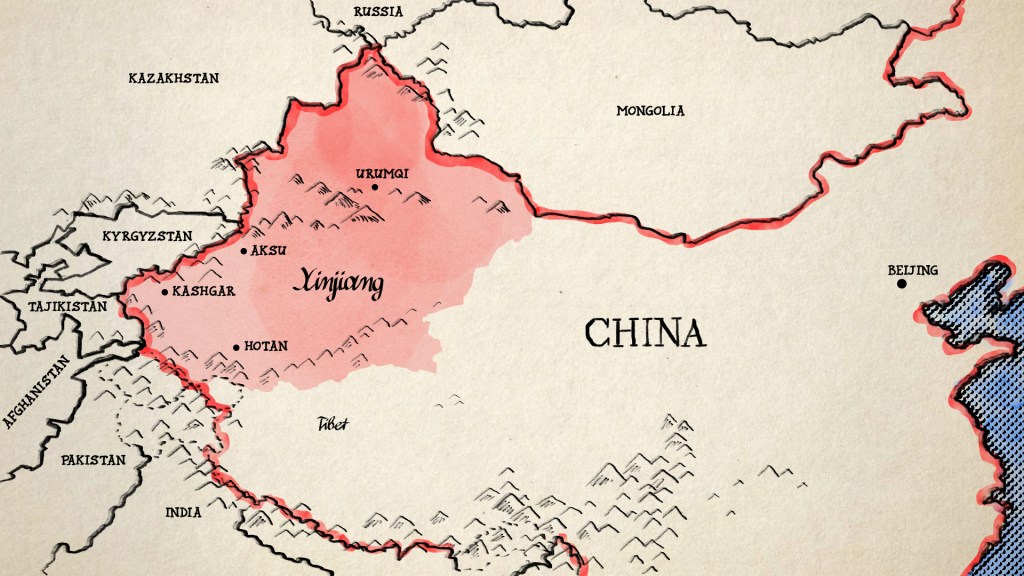
Xinjiang: Human Rights, Security, and Geopolitical Tensions in China’s Far West
Introduction
Xinjiang, a vast and resource-rich region in northwest China, has become a focal point of global concern over human rights, security, and geopolitical maneuvering. Known for its unique cultural heritage, Xinjiang is home to the Uyghurs—a Turkic-speaking, predominantly Muslim ethnic group—as well as other ethnic minorities, including Kazakhs, Kyrgyz, and Hui. Historically, Xinjiang has bridged East and West, serving as a crucial passage along the ancient Silk Road. However, in recent years, it has drawn international condemnation over China’s policies toward its Uyghur population, which human rights organizations and several governments describe as oppressive. China frames its policies as counterterrorism and economic development, while critics argue that Beijing is conducting a campaign of cultural erasure, mass surveillance, and forced assimilation. As Xinjiang becomes a central point of contention in U.S.-China relations and broader debates on human rights, its future reflects both the challenges and complexities of ethnic identity, national security, and global influence.
Historical Context: Xinjiang’s Path to Chinese Control
Xinjiang’s relationship with China has fluctuated over the centuries, from periods of independence to incorporation as an autonomous region. Historically, Xinjiang was a culturally and politically diverse area, connected to Central Asia and influenced by both Islamic and Buddhist civilizations. Known as East Turkestan by its Turkic-speaking inhabitants, the region only formally became part of China under the Qing Dynasty in the 18th century.
In the early 20th century, Xinjiang experienced brief periods of independence and semi-autonomy. However, following the Chinese Civil War, Xinjiang came under Communist control in 1949, and the People’s Republic of China solidified its hold over the region. In 1955, Xinjiang was designated an “autonomous region,” which ostensibly promised local governance and cultural preservation for its ethnic minorities. In practice, however, Beijing has exerted direct control over Xinjiang, encouraging Han Chinese migration into the area and fostering economic integration, particularly after China’s economic reforms in the 1980s. Tensions between the Uyghur population and the Chinese government simmered for decades, rooted in cultural differences, socioeconomic disparities, and grievances over religious restrictions.
Security Concerns: Counterterrorism or Cultural Suppression?
In the 1990s and 2000s, tensions in Xinjiang began to escalate, with protests and occasional violent incidents emerging in response to Beijing’s policies. The Chinese government argues that these disturbances were driven by separatist sentiments and Islamic extremism, linking the unrest to the global rise in terrorism after 9/11. In 2009, ethnic violence broke out in Urumqi, Xinjiang’s capital, between Uyghurs and Han Chinese residents, leaving nearly 200 people dead. This incident intensified China’s focus on security in Xinjiang, with Beijing citing the need to combat extremism and maintain stability.
China’s response to perceived threats of terrorism and separatism in Xinjiang has been sweeping and highly controversial. Since 2017, reports indicate that over one million Uyghurs and other Muslim minorities have been detained in a network of re-education camps across Xinjiang. China describes these facilities as “vocational training centers” aimed at combating extremism and offering job skills. However, testimonies from former detainees, satellite images, and investigative reports suggest that these camps involve indoctrination, forced labor, and, at times, physical and psychological abuse. Critics argue that the Chinese government is pursuing a policy of cultural suppression, seeking to assimilate Uyghurs by targeting their language, religious practices, and identity.
Surveillance and the “Digital Police State”
In addition to the detention camps, Xinjiang is one of the most surveilled regions in the world. China has implemented an extensive, technology-driven surveillance network that monitors individuals’ movements, communications, and even religious practices. Facial recognition cameras, biometric data collection, and smartphone tracking have become common tools in Xinjiang, with authorities monitoring everything from mosque attendance to travel patterns. This digital surveillance system collects vast amounts of data, allowing authorities to track individuals deemed “suspicious” or “untrustworthy.”
The surveillance infrastructure in Xinjiang represents China’s broader experimentation with high-tech policing, which could serve as a model for other parts of the country or even abroad. For Uyghurs, this “digital police state” has created an environment of constant surveillance, with reports of families, friends, and communities pressured to report each other’s behavior to authorities. Such pervasive monitoring has led to the erosion of trust and the loss of personal and religious freedoms for many Uyghurs, while leaving them little recourse to challenge their treatment.
Forced Labor and Economic Exploitation
Reports from human rights organizations allege that Uyghurs in Xinjiang face forced labor in factories, both within the re-education camps and across other parts of China. Many Uyghurs are reportedly transferred to factories under coercive conditions to work in industries such as textiles, electronics, and agriculture. Xinjiang is also a global supplier of cotton, producing about 20% of the world’s supply, and investigations have revealed evidence of forced labor within the region’s cotton production industry.
These allegations have drawn significant international backlash, with brands facing scrutiny over their supply chains and pressure to ensure they are not indirectly supporting forced labor practices in Xinjiang. In response, the United States has enacted sanctions targeting companies and officials linked to forced labor practices in Xinjiang, including import bans on certain goods produced in the region. This issue has sparked a broader discussion on the ethical implications of global trade and the responsibility of multinational corporations to prevent human rights abuses within their supply chains.
Global Reactions: Sanctions, Condemnations, and Diplomatic Tensions
The situation in Xinjiang has elicited strong reactions from governments, human rights organizations, and international bodies. The United States, Canada, and the European Union have condemned China’s treatment of Uyghurs, describing it as genocide or crimes against humanity. In response, these countries have imposed sanctions on Chinese officials and companies believed to be involved in the abuses, signaling a willingness to confront China on human rights issues despite economic and political costs.
China has responded with forceful denials, claiming that Western powers are interfering in its internal affairs and using the Uyghur issue as a tool to undermine China’s stability. Chinese officials have defended their policies in Xinjiang as counterterrorism measures and have organized tours of select facilities in an attempt to dispel claims of abuse. Beijing has also leveraged its economic influence to garner support from countries in Africa, the Middle East, and Asia, many of which have publicly backed China’s policies in Xinjiang or remained silent on the issue, reflecting China’s success in using trade and investment as diplomatic tools.
The Xinjiang issue has added significant strain to U.S.-China relations, as well as to China’s ties with Europe and other democracies. In the broader geopolitical context, Xinjiang represents a flashpoint for competing visions of human rights, sovereignty, and the extent of international intervention.
The Belt and Road Initiative and Strategic Interests in Xinjiang
Xinjiang plays a crucial role in China’s Belt and Road Initiative (BRI), a massive infrastructure and trade project designed to connect China to markets across Asia, Africa, and Europe. As a key transit hub for routes linking China to Central Asia and beyond, Xinjiang is central to Beijing’s ambitions to expand its global economic influence. The stability of Xinjiang is therefore critical to the success of the BRI, as unrest or resistance in the region could threaten critical infrastructure and trade corridors.
For China, controlling Xinjiang is not only about security but also about safeguarding the economic interests embedded in the BRI. Xinjiang’s geographical location makes it a strategic asset, and China’s investment in infrastructure in the region reflects its determination to integrate Xinjiang fully into its economic vision. This dual purpose—economic integration and security control—further drives China’s resolve to impose strict policies in Xinjiang, underscoring the region’s importance to China’s long-term strategic interests.
Future Prospects: A Path Forward or a Deeper Divide?
The future of Xinjiang remains uncertain. China has shown little willingness to alter its approach, framing its policies as necessary for counterterrorism and development, despite international condemnation. Meanwhile, the Uyghur diaspora and international advocacy groups continue to push for accountability and protection of Uyghur rights. The global spotlight on Xinjiang is unlikely to wane, as human rights organizations, Western governments, and even private corporations take steps to address forced labor and advocate for Uyghur rights.
The Xinjiang issue has also become a test case for the international community’s response to human rights abuses. As China’s economic and political influence grows, countries around the world face difficult choices about how to balance human rights concerns with economic ties to Beijing. For Uyghurs and other ethnic minorities in Xinjiang, the hope for cultural preservation and basic freedoms persists, even amid formidable challenges.
Conclusion: Xinjiang as a Global Human Rights Battleground
Xinjiang stands as a powerful symbol of the complex intersections between human rights, sovereignty, and global power. China’s policies in Xinjiang are emblematic of its approach to ethnic minorities, national security, and regional control, while the international response highlights broader tensions between economic interests and moral imperatives. As Xinjiang continues to shape global discourse, it forces the world to grapple with the implications of China’s rise and the limits of international influence on a powerful state’s domestic policies.
Ultimately, Xinjiang reflects the high stakes in contemporary geopolitics, where the rights of a minority population, the ambitions of a powerful nation, and the conscience of the global community converge. The choices made today by China, the Uyghur people, and the international community will resonate well into the future, shaping not only the fate of Xinjiang but also the global approach to human rights, sovereignty, and accountability. Xinjiang’s story is emblematic of a rapidly changing world, where the rights of minority communities and the ethics of governance are increasingly at odds with economic pragmatism and state-driven narratives.
The decisions made by governments, corporations, and international institutions will set a precedent, influencing how the world responds to similar issues in the future. Whether the outcome in Xinjiang leads to increased international pressure, meaningful reforms, or continued repression, it will undoubtedly impact global norms around human rights and the influence nations wield beyond their borders. In this way, Xinjiang serves as a crucial test of humanity’s commitment to justice in a world where power dynamics are shifting, but the universal aspiration for dignity and cultural survival remains constant.
 Apocalypse Now Threedux: World War Thr33
Leave a comment