Central African Republic: A Nation Struggling for Peace and Stability
Introduction
The Central African Republic (CAR) is a land of vast natural wealth and deep-rooted cultural heritage, yet its recent history has been marred by persistent instability, ethnic and sectarian conflict, and political crises. Landlocked in the heart of Africa, CAR’s story is emblematic of the challenges facing many post-colonial states: a struggle for governance, peace, and national unity. Despite its resources—including diamonds, gold, and uranium—CAR remains one of the world’s poorest nations. As the country attempts to rebuild from years of civil war and unrest, it faces a complex set of challenges that include local militia violence, foreign interference, and a pressing humanitarian crisis. CAR’s journey toward peace is a stark reminder of both the resilience of its people and the formidable obstacles that stand in the way of sustainable development.
Colonial Legacy and Independence: Fragile Foundations
CAR’s instability can be traced back to its colonial past. Initially colonized by France in the late 19th century, the territory—known then as Ubangi-Shari—suffered under exploitative colonial practices that disregarded indigenous cultures and imposed harsh labor conditions. France extracted resources with little investment in infrastructure or social development, and colonial rulers often dealt with local communities through coercion and force.
In 1960, CAR gained independence under President David Dacko. However, like many post-colonial African states, CAR’s new government faced challenges, including a lack of experienced administrators, weak institutions, and limited economic opportunities. These fragile foundations would soon lead to political instability. The post-independence period was marked by authoritarian rule, corruption, and a series of coups, most famously the brutal regime of Jean-Bédel Bokassa, who declared himself Emperor in 1976. Bokassa’s rule epitomized the excesses of CAR’s early post-colonial governance, and he was eventually overthrown in a French-supported coup in 1979.
Over the decades, successive governments struggled to establish stability. Military coups, weak institutions, and frequent leadership changes became the norm, setting the stage for deeper divisions and a series of conflicts that would plunge the country into prolonged violence.
The Rise of Rebel Factions and the Seeds of Conflict
By the early 2000s, CAR’s state institutions were weakened, and various rebel groups emerged, capitalizing on the government’s inability to control large swathes of the country. These groups often aligned themselves along ethnic and sectarian lines, reflecting deeper divisions within CAR’s diverse population. In 2003, General François Bozizé seized power, but his rule did little to bring stability; rather, it exacerbated tensions and economic hardship.
In 2013, CAR descended into a full-scale civil war. A coalition of predominantly Muslim rebel groups known as the Séléka seized control of the capital, Bangui, ousting Bozizé. The Séléka alliance, drawing fighters from the Muslim minority in the country’s northeast, committed widespread atrocities, which in turn provoked a violent backlash. Christian and animist militias, known as the Anti-balaka, mobilized against the Séléka forces, leading to a brutal cycle of sectarian violence. This period marked a significant escalation, as communities turned on each other in some of the most intense sectarian violence CAR had ever seen.
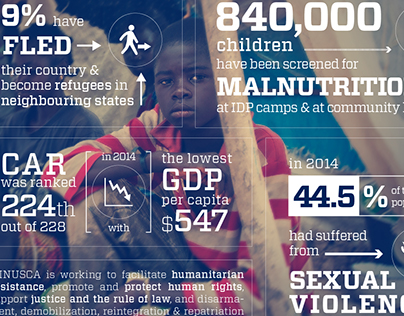
The conflict not only polarized the country along religious lines but also led to massive displacement, with hundreds of thousands of Central Africans fleeing to neighboring countries. The violence drew international concern, prompting the United Nations to deploy a peacekeeping mission, known as MINUSCA, in 2014. Despite MINUSCA’s presence, the conflict has persisted, with waves of violence continuing to flare up over the years.
International Intervention and the Role of France, Russia, and the UN
The ongoing conflict in CAR has attracted the involvement of foreign powers, each with its own strategic interests. France, the former colonial power, has traditionally played a significant role in CAR, viewing it as part of its sphere of influence in Africa. French troops have intervened multiple times, often in response to instability that threatens French economic and political interests. In 2013, France launched Operation Sangaris, a military mission intended to stabilize CAR and support the deployment of MINUSCA. While Operation Sangaris helped curb immediate violence, French forces ultimately withdrew in 2016, as anti-French sentiment and accusations of abuses by foreign troops strained relations.
More recently, Russia has emerged as an influential actor in CAR. Through the deployment of private military contractors from the Wagner Group and official advisers, Russia has provided military assistance to President Faustin-Archange Touadéra’s government, ostensibly to combat rebel forces. In return, Russian companies have gained access to CAR’s valuable resources, particularly diamonds and gold. Russia’s involvement has raised concerns about exploitation and human rights abuses, as reports of violence against civilians by Wagner operatives have surfaced.
Meanwhile, the United Nations’ MINUSCA mission remains active, but it faces significant challenges. With limited resources, the peacekeeping force has struggled to contain violence across CAR’s vast and rugged terrain. Peacekeepers are often caught between warring factions, and incidents of violence against civilians, humanitarian workers, and UN personnel underscore the mission’s precarious position. Nonetheless, MINUSCA provides critical security and logistical support, particularly in urban areas and regions most affected by violence.
Humanitarian Crisis: A Nation in Peril
CAR’s civil war has left the country in one of the world’s worst humanitarian crises. Over half of the population is in need of humanitarian assistance, with basic services such as healthcare, clean water, and education severely limited. The conflict has displaced over a million people, with many living in makeshift camps or as refugees in neighboring countries like Chad, Cameroon, and the Democratic Republic of the Congo. The displacement crisis has put immense strain on both local communities and international aid agencies, which struggle to provide resources in a region plagued by insecurity.
Food insecurity is widespread, exacerbated by disrupted agriculture, rising food prices, and climate-related challenges. Many farmers have abandoned their land due to violence, leaving crops unharvested and food supplies dwindling. This lack of food security, combined with limited access to healthcare, has led to malnutrition, especially among children, and made communities vulnerable to diseases like malaria and cholera.
Despite efforts by humanitarian organizations, the ongoing violence restricts access to many regions, putting millions beyond the reach of aid. The persistent insecurity also hinders efforts to rebuild essential infrastructure, meaning even basic needs like clean water and sanitation are scarce for much of the population.
Pathways to Peace: National Dialogues and Fragile Agreements
In recent years, CAR has made several attempts at peace through national dialogues and peace agreements, although implementation has been fraught with challenges. In 2019, the Khartoum Agreement, brokered by the African Union and supported by the UN, was signed between the government and 14 rebel groups, offering a glimmer of hope for a peaceful resolution. However, factional infighting, lack of trust, and the influence of armed groups that benefit economically from instability have all undermined progress.
The government, under President Touadéra, has promoted disarmament and reintegration programs aimed at former combatants, yet these initiatives face hurdles from entrenched local grievances, competition over resources, and distrust between communities. Despite these challenges, the people of CAR continue to call for peace and justice, showing a remarkable resilience and desire for unity amid the violence.
Conclusion: CAR’s Resilience and the Road Ahead
The Central African Republic’s journey toward stability remains complex, with both internal and external forces shaping its future. Although foreign interventions have at times offered temporary relief, lasting peace will require a deep commitment to addressing the underlying causes of conflict—such as poverty, inequality, and ethnic divisions. Strengthening institutions, fostering inclusive governance, and empowering local peacebuilding initiatives will be crucial steps toward establishing sustainable peace.
CAR’s resilience lies in its people, who have endured decades of hardship yet continue to aspire for a peaceful, united nation. For the international community, CAR is a reminder of the importance of sustained support and engagement, not only in moments of crisis but in the long, challenging work of post-conflict recovery. As CAR looks ahead, its path will demand resilience, cooperation, and a commitment to rebuilding a country that has seen the depths of conflict but dreams of a future rooted in stability and hope.
 Apocalypse Now Threedux: World War Thr33
Leave a comment