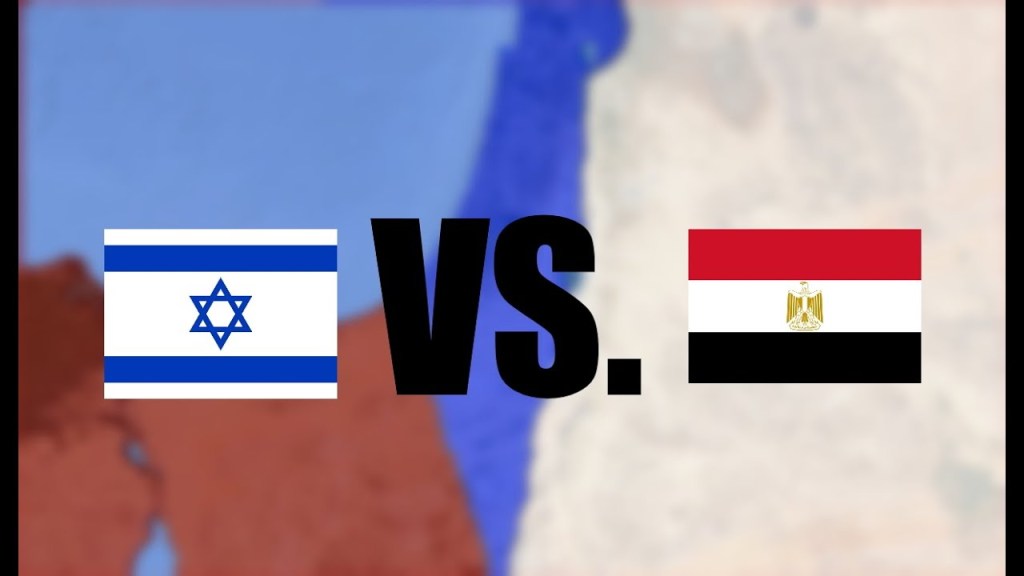
Egypt and Israel: From War to Peace and the Pursuit of Stability in the Middle East
Introduction
The relationship between Egypt and Israel is one of the most consequential and complex in the Middle East. Marked by a history of intense conflict, groundbreaking diplomacy, and delicate peace, this relationship has shaped the region’s geopolitical landscape for over half a century. Following decades of hostilities—including four major wars—Egypt became the first Arab country to formally recognize Israel, signing a peace treaty in 1979 that remains a foundation of Middle Eastern stability. Yet, even as Egypt and Israel maintain a “cold peace,” their partnership remains largely pragmatic, driven by mutual security concerns, economic interests, and shared strategic objectives. Today, Egypt and Israel’s evolving relationship offers both a case study in peacebuilding and a reflection of the broader challenges facing the Middle East.
Historical Background: From War to Diplomatic Breakthrough
The roots of the Egypt-Israel relationship lie in the Arab-Israeli conflict, which began with the establishment of Israel in 1948. Egypt, under King Farouk and later President Gamal Abdel Nasser, led a coalition of Arab states in multiple wars against Israel, starting with the Arab-Israeli War of 1948. Egypt’s fierce opposition to Israel defined much of its early foreign policy, with Nasser’s vision of Arab nationalism and unity central to his rhetoric against the Jewish state.
The 1956 Suez Crisis, in which Egypt nationalized the Suez Canal, sparked a brief but intense conflict between Egypt, Israel, the United Kingdom, and France. Tensions between Egypt and Israel reached a boiling point again in the 1967 Six-Day War, when Israel launched a preemptive strike and captured the Sinai Peninsula, Gaza Strip, and other territories, marking a decisive shift in the power dynamics of the region.
In 1973, Egypt and Syria launched a surprise attack on Israel during Yom Kippur, leading to the Yom Kippur War. Although the war ultimately ended in a military stalemate, it marked a psychological and strategic turning point. The war boosted Egyptian President Anwar Sadat’s credibility in the Arab world and laid the groundwork for his historic decision to pursue peace with Israel.
The Camp David Accords: A Groundbreaking Peace Agreement
In 1978, U.S. President Jimmy Carter facilitated a series of secretive meetings between Egyptian President Anwar Sadat and Israeli Prime Minister Menachem Begin at Camp David, Maryland. These talks culminated in the signing of the Camp David Accords, which paved the way for the Egypt-Israel Peace Treaty in 1979. The treaty saw Israel return the Sinai Peninsula to Egypt in exchange for Egypt’s formal recognition of Israel, making Egypt the first Arab state to recognize the Jewish state.
The Camp David Accords and subsequent peace treaty were transformative, ending three decades of conflict between the two nations and reshaping the Middle East. For Egypt, the treaty brought economic aid and strengthened ties with the United States, but it also led to a backlash within the Arab world. Sadat faced condemnation from other Arab leaders, and Egypt was briefly suspended from the Arab League. Domestically, the treaty contributed to rising tensions, culminating in Sadat’s assassination by Islamic extremists in 1981. Despite this, his successor, Hosni Mubarak, upheld the treaty, cementing Egypt’s role as a mediator in the Arab-Israeli conflict.
A “Cold Peace”: Pragmatism and Limited Cooperation
Since the Camp David Accords, Egypt and Israel have maintained a “cold peace”—a peace characterized by a lack of deep societal engagement, limited cultural exchange, and mutual wariness. While the peace treaty normalized diplomatic and economic relations, societal attitudes in Egypt have largely remained skeptical of Israel, with public sentiment shaped by years of conflict, mistrust, and solidarity with the Palestinian cause.
Despite this, pragmatic cooperation has become a foundation of the Egypt-Israel relationship, particularly in areas of mutual interest such as security, counterterrorism, and energy. Both nations share a strategic interest in maintaining stability in the Sinai Peninsula, a vast and sparsely populated area that has become a haven for militants and criminal networks. Since 2011, when Egypt’s revolution led to political upheaval, Sinai has witnessed a surge in extremist activity. Israel has quietly supported Egypt’s military efforts to combat militants in Sinai, allowing Egyptian forces to deploy beyond the restrictions set by the peace treaty. This cooperation underscores the practical, if often unpublicized, nature of the Egypt-Israel relationship.
The Gaza Factor: Security and Humanitarian Concerns
The Gaza Strip, which borders both Egypt and Israel, has been a persistent challenge for the two countries. Egypt shares Israel’s concerns about Hamas, the Islamist militant group that controls Gaza and has ties to the Muslim Brotherhood, a movement that Egyptian President Abdel Fattah el-Sisi views as a threat to his government. Egypt and Israel have worked closely on Gaza’s security, often coordinating restrictions on cross-border movement to prevent arms smuggling and militant activity.
However, Egypt’s role as a mediator in the Israel-Palestine conflict has also allowed it to maintain its influence within the Arab world. Egypt has regularly brokered ceasefires between Hamas and Israel during flare-ups in Gaza, balancing its security concerns with its role as an intermediary. This balancing act highlights Egypt’s complex position—aligned with Israel on security, yet sympathetic to Palestinian aspirations in the eyes of the Arab world.
Economic Cooperation: Energy, Trade, and Regional Integration
In recent years, economic cooperation between Egypt and Israel has expanded, driven by mutual interests in energy and trade. The discovery of natural gas fields in the Eastern Mediterranean has transformed the region’s energy landscape, and Egypt and Israel have found common ground in exploiting these resources. The two countries signed agreements to export Israeli gas to Egypt, positioning Egypt as a regional energy hub capable of liquefying natural gas for re-export to Europe.
This energy partnership reflects a shift toward greater economic pragmatism, as both countries recognize the benefits of cooperation in achieving energy security and regional stability. Additionally, Qualified Industrial Zones (QIZs) established in Egypt allow Egyptian goods with Israeli components to enter the United States tariff-free. These economic arrangements have fostered a limited but growing trade relationship, underscoring how shared economic interests can build ties even in a politically cautious environment.
U.S. Influence and the Strategic Alliance
The Egypt-Israel relationship is closely tied to U.S. foreign policy in the Middle East. Both countries receive significant military aid from the United States, with Egypt and Israel ranking as top recipients. For Washington, the peace treaty is a cornerstone of Middle Eastern stability, and U.S. support has played a critical role in sustaining this arrangement. Egypt’s close ties with the U.S. give it strategic leverage, and American military aid has strengthened Egypt’s position as a regional power.
Under Presidents Mubarak, Morsi, and later Sisi, Egypt has maintained this strategic alignment, although relations with Washington have occasionally been tested by Egypt’s internal politics. Nevertheless, the U.S.-backed peace remains an essential component of the Egypt-Israel relationship, creating a regional power balance that serves both countries’ interests.
Challenges and Future Prospects
While Egypt and Israel have achieved a historic peace, several challenges remain. Societal mistrust in Egypt limits public engagement with Israel, and anti-Israel sentiment remains high, largely due to solidarity with the Palestinian cause. Egypt’s government often downplays its cooperation with Israel to avoid stirring public opposition, a dynamic that keeps the peace limited to the political and economic spheres rather than fostering deeper societal ties.
The stability of the Egypt-Israel relationship will also depend on regional developments, including the status of Gaza, the future of Israeli-Palestinian relations, and shifts in U.S. foreign policy. Additionally, Egypt faces internal pressures, including economic challenges, political dissent, and extremist threats, which could impact its ability to maintain regional commitments. Climate change and resource scarcity, particularly in water and agriculture, may also shape future cooperation, as both nations face environmental pressures that could drive collaboration on resource management.
Conclusion: A Model of Pragmatic Peace in a Turbulent Region
The Egypt-Israel peace is often referred to as a “cold peace,” yet it has proved remarkably resilient in a region fraught with volatility. Over 40 years after the Camp David Accords, Egypt and Israel’s relationship remains a model of pragmatic coexistence, balancing security cooperation and economic interests with cautious diplomacy. This enduring peace underscores the potential for stability when former adversaries find common ground, even amid lingering mistrust and societal skepticism.
While the future of the Egypt-Israel relationship will face inevitable challenges, the foundation of cooperation and mutual respect has so far endured. As the Middle East grapples with new uncertainties, Egypt and Israel’s experience offers lessons in conflict resolution, the importance of diplomacy, and the possibilities for peace in one of the world’s most divided regions. For Egypt and Israel, the path forward is complex, but the stakes are clear: maintaining this fragile peace is essential for both nations—and the region as a whole.
 Apocalypse Now Threedux: World War Thr33
Leave a comment