Tibet: A Region of Cultural Richness, Geopolitical Tensions, and the Fight for Autonomy
Introduction
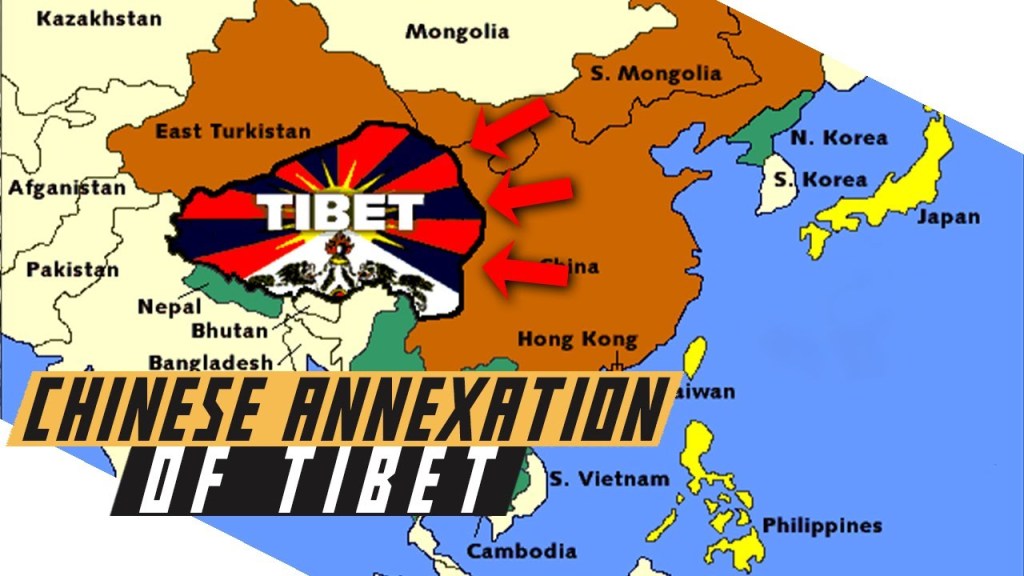
Tibet, a region often called the “Roof of the World” due to its high-altitude location in the Himalayas, has long been the subject of both reverence and contention. Known for its unique culture, deep spiritual traditions, and breathtaking landscapes, Tibet is also a focal point of intense geopolitical struggle. For centuries, Tibet existed as an independent or semi-autonomous region, largely isolated from the broader world. However, since China’s annexation in 1950, Tibet has been a flashpoint for international debate over sovereignty, human rights, and cultural preservation. Today, Tibetans continue to advocate for greater autonomy and religious freedom, while China maintains tight control over the region, citing security and territorial integrity. Tibet’s struggle captures the world’s attention, raising difficult questions about sovereignty, identity, and the limits of global influence.
Historical Background: Tibet’s Journey from Isolation to Occupation
Tibet’s history is complex, with periods of both independence and foreign influence. In the 7th century, Tibet emerged as a powerful kingdom, establishing itself as a cultural and military force in Central Asia. Over time, Tibetan Buddhism became central to its identity, with the Dalai Lama assuming both spiritual and political leadership by the 17th century. Though Tibet had close cultural and religious ties to China, it largely maintained independence or autonomy, managing its affairs separate from Chinese rule.
The relationship between Tibet and China became more complicated during the early 20th century. Following the fall of the Qing Dynasty in 1912, Tibet declared its independence, enjoying a few decades of de facto autonomy. However, in 1950, the People’s Republic of China, under Mao Zedong, claimed Tibet as an integral part of China and sent troops to “liberate” the region. In 1951, the Seventeen Point Agreement was signed between representatives of Tibet and China, effectively solidifying Chinese control but promising Tibetan autonomy and religious freedom. Tensions continued to simmer, however, particularly as China’s policies became more assertive, ultimately leading to open conflict.
The 1959 Uprising and the Dalai Lama’s Exile
In March 1959, growing resentment over Chinese rule boiled over, culminating in a major uprising in Lhasa, Tibet’s capital. Thousands of Tibetans protested Chinese policies, demanding greater autonomy and respect for their cultural and religious traditions. The uprising was met with force, resulting in thousands of deaths and the eventual suppression of the Tibetan resistance.
Following the crackdown, the 14th Dalai Lama, Tibet’s spiritual and political leader, fled to India, where he was granted asylum. He established a government-in-exile in Dharamshala, dedicated to preserving Tibetan culture, advocating for human rights, and promoting nonviolent resistance. The Dalai Lama’s exile transformed him into a global symbol of peace and Tibetan self-determination, drawing international attention to Tibet’s plight. Since then, the Tibetan government-in-exile has sought to gain support for Tibet’s autonomy on the world stage, though it has struggled to counter China’s influence and control over the narrative.
China’s Control and the “Sinicization” of Tibet
Since taking control of Tibet, China has implemented a series of policies aimed at integrating Tibet more fully into the Chinese state. These policies have included economic development projects, large-scale infrastructure initiatives, and the promotion of Mandarin as the primary language of education and governance. China argues that these measures have modernized Tibet and lifted the region out of poverty, providing Tibetans with improved infrastructure, healthcare, and access to education.
However, many Tibetans and international observers argue that China’s policies amount to cultural assimilation, threatening the survival of Tibetan identity. Policies mandating Mandarin in schools and suppressing Tibetan-language education have been particularly contentious, as have restrictions on religious practices. China has imposed tight restrictions on Tibetan Buddhism, controlling monasteries, monitoring religious activities, and placing limits on gatherings. Even the selection of Tibetan religious leaders is now controlled by the Chinese government, a policy that Beijing has justified by arguing that it seeks to prevent the Dalai Lama’s influence from sparking separatism.
The Question of the Next Dalai Lama
One of the most pressing issues facing Tibetan Buddhism and China-Tibet relations is the question of the next Dalai Lama. According to Tibetan Buddhist tradition, the Dalai Lama reincarnates, with each successor believed to be the rebirth of the previous one. The 14th Dalai Lama, now in his late 80s, has publicly stated that he may choose not to reincarnate, or that his successor may be found outside of China. This assertion has led to a potential clash with Beijing, which insists that it has the authority to select the next Dalai Lama within its borders, in accordance with a longstanding tradition of government involvement in religious affairs.
China’s plan to appoint its own Dalai Lama threatens to create a deep division within Tibetan Buddhism, potentially leading to two rival Dalai Lamas—one recognized by China and the other by the Tibetan government-in-exile. This issue underscores the ongoing struggle over Tibetan identity and religious freedom, with the Dalai Lama’s succession likely to intensify global interest in Tibet’s future.
Environmental Concerns: The “Water Tower of Asia”
Tibet’s significance extends beyond culture and politics, as it also holds considerable environmental importance. Known as the “Water Tower of Asia,” Tibet’s glaciers and river systems feed some of Asia’s largest rivers, including the Yangtze, Mekong, and Brahmaputra. These rivers support the livelihoods of over a billion people across multiple countries, making Tibet’s environmental stability crucial to regional water security.
China has invested heavily in hydroelectric projects on Tibetan rivers, including a major dam on the Brahmaputra, sparking concerns in downstream countries such as India and Bangladesh. These projects not only impact water flows but also pose ecological risks for the Tibetan Plateau itself. Climate change has further heightened these concerns, as rising temperatures accelerate glacial melt and threaten Tibet’s delicate ecosystem. The Chinese government’s approach to Tibet’s environment is thus entangled with its broader strategic ambitions, as control over water resources gives China considerable influence over its neighbors.
International Advocacy and the Tibetan Diaspora
Tibet’s struggle for autonomy has garnered significant international support, especially among human rights groups, celebrities, and Western governments. Advocacy organizations such as the International Campaign for Tibet, Students for a Free Tibet, and Amnesty International work tirelessly to raise awareness about Tibet’s human rights abuses and the preservation of its cultural heritage. While these efforts have succeeded in keeping Tibet in the global conversation, the response from major powers has been limited, with few nations willing to challenge China directly over its policies in Tibet.
The Tibetan diaspora, estimated to number around 150,000, plays a crucial role in advocating for Tibetan rights and autonomy. Centered primarily in India, Nepal, North America, and Europe, Tibetan communities have organized protests, cultural events, and campaigns to highlight their cause. The Dalai Lama’s teachings, which emphasize compassion, nonviolence, and religious tolerance, resonate globally and have helped create a powerful moral case for Tibetan autonomy. However, as China’s economic power grows, countries increasingly hesitate to support the Tibetan cause openly, fearing repercussions in their relations with Beijing.
Geopolitical Tensions: India, the U.S., and China’s “One China” Policy
The Tibet issue has also become a factor in broader geopolitical dynamics, particularly between China, India, and the United States. India’s hosting of the Dalai Lama and the Tibetan government-in-exile has long been a point of friction between New Delhi and Beijing. This tension plays into the larger India-China rivalry, especially as China increases its influence in South Asia and constructs infrastructure along its border with India, including in Tibetan regions. Border skirmishes between Indian and Chinese troops along the Himalayas, including in disputed areas, have occasionally raised the specter of Tibet as a potential flashpoint.
The United States has also been a vocal supporter of Tibet’s cultural and religious freedoms, with Congress passing the Tibet Policy and Support Act in 2020. This legislation reaffirms U.S. support for the Dalai Lama’s right to determine his successor and provides for sanctions against Chinese officials who interfere in Tibetan religious matters. While these actions underscore the symbolic importance of Tibet in U.S.-China relations, they have limited impact on China’s policies, given China’s control over the region and its economic leverage.
The Future of Tibet: Autonomy or Assimilation?
As Tibet enters the 21st century, its future remains uncertain. The Dalai Lama has advocated for a “Middle Way” approach, seeking genuine autonomy for Tibet within China rather than full independence. However, China’s government remains largely unresponsive to calls for greater autonomy, insisting that Tibet is an integral part of its territory. As China continues to develop the region and integrate it more deeply into its economy and infrastructure, the prospect of meaningful autonomy seems increasingly remote.
For Tibetans, the struggle is not only about political freedom but also the preservation of a culture and spiritual tradition that is central to their identity. Many young Tibetans are committed to keeping their heritage alive, even in exile, and their resilience offers a beacon of hope amid difficult odds.
Conclusion: Tibet’s Long Path to Self-Determination
The question of Tibet’s future is emblematic of the larger tension between national sovereignty and human rights. For China, Tibet represents both a territory of strategic importance and a crucial element of its national unity. For Tibetans, it is a homeland with a distinct cultural and spiritual identity, deserving of recognition and protection. While the path forward is unclear, Tibet remains a powerful symbol of resilience in the face of adversity.
As global attention continues to focus on human rights and cultural preservation, Tibet’s struggle reminds the world of the importance of protecting minority rights, religious freedom, and cultural identity, even in the face of overwhelming political power. Tibet’s struggle raises fundamental questions about the limits of state control and the rights of people to preserve their way of life. For the international community, Tibet remains a moral test of its commitment to human rights in a world increasingly shaped by geopolitical interests and economic dependencies.
While the future of Tibet is uncertain, the resilience of the Tibetan people and their commitment to nonviolent resistance offer a compelling example of the enduring power of identity and cultural heritage. Tibet’s journey continues to inspire advocates worldwide, keeping alive the hope that one day, Tibetans may find a resolution that honors their unique identity while balancing the realities of the modern geopolitical landscape.
 Apocalypse Now Threedux: World War Thr33
Leave a comment