Faultlines of Fire: The Ukraine-Russia Conflict, from Roots to the Present

Introduction
The Ukraine-Russia conflict isn’t just a clash between two countries. It’s a high-stakes struggle on Europe’s doorstep, a geopolitical earthquake whose tremors have rippled worldwide. What started with simmering grievances between Ukraine and its more powerful neighbor has exploded into full-scale warfare, redrawing the lines of modern geopolitics and reigniting Cold War tensions. As we dig into this tale of power, history, and resilience, brace yourself for a story that spans centuries, revealing what this conflict means not just for Ukraine and Russia but for the entire world.
Setting the Stage: A Complex History of Identity and Power
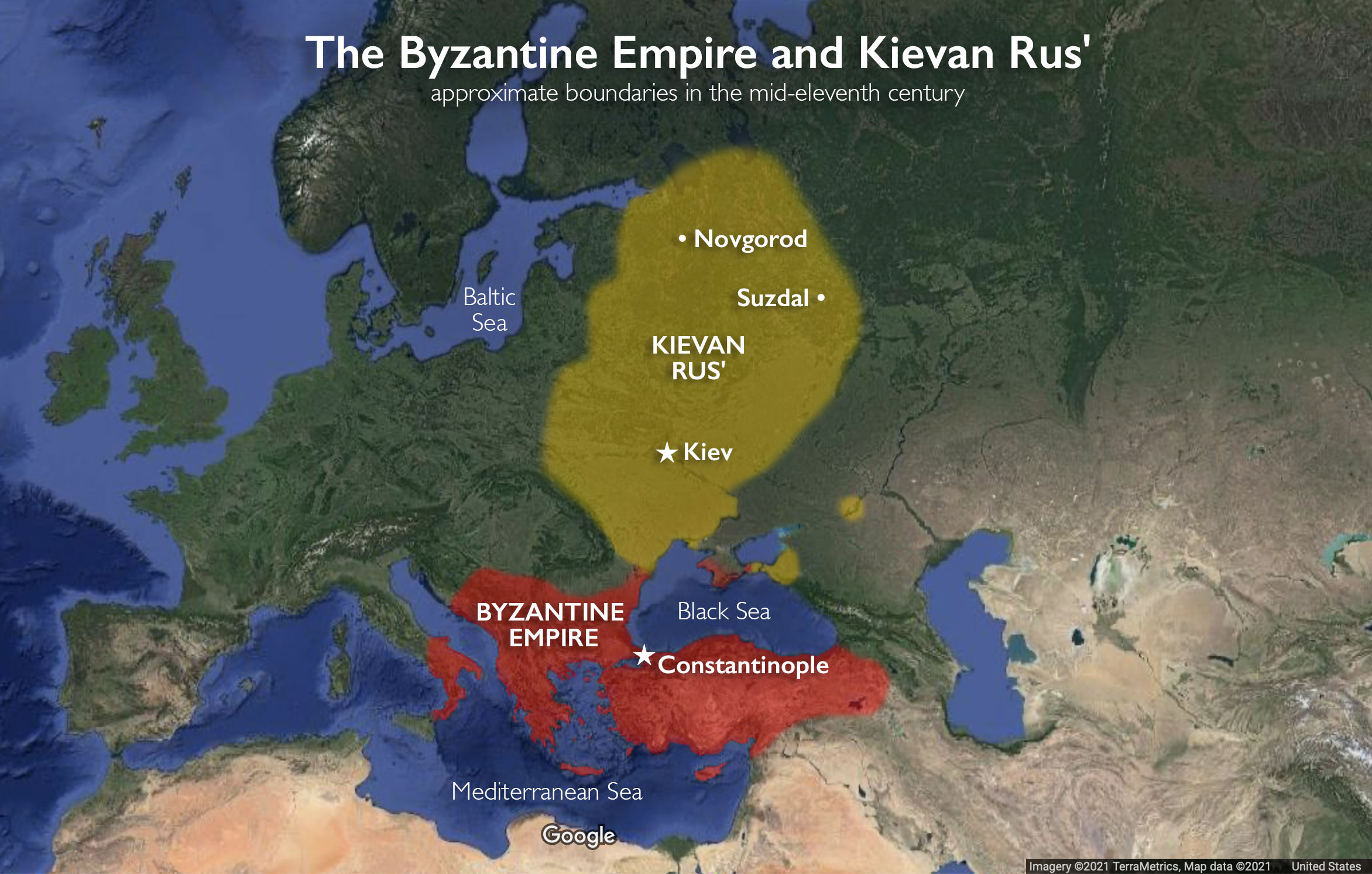
The seeds of today’s Ukraine-Russia conflict go back centuries, as both Ukrainians and Russians trace their heritage to Kyivan Rus, a powerful medieval state centered in present-day Kyiv. But over time, Ukraine became a battleground of empires. Conquered and divided by Russia, Poland, and the Austro-Hungarian Empire, the Ukrainian people developed a strong sense of cultural identity, one often suppressed by Moscow.
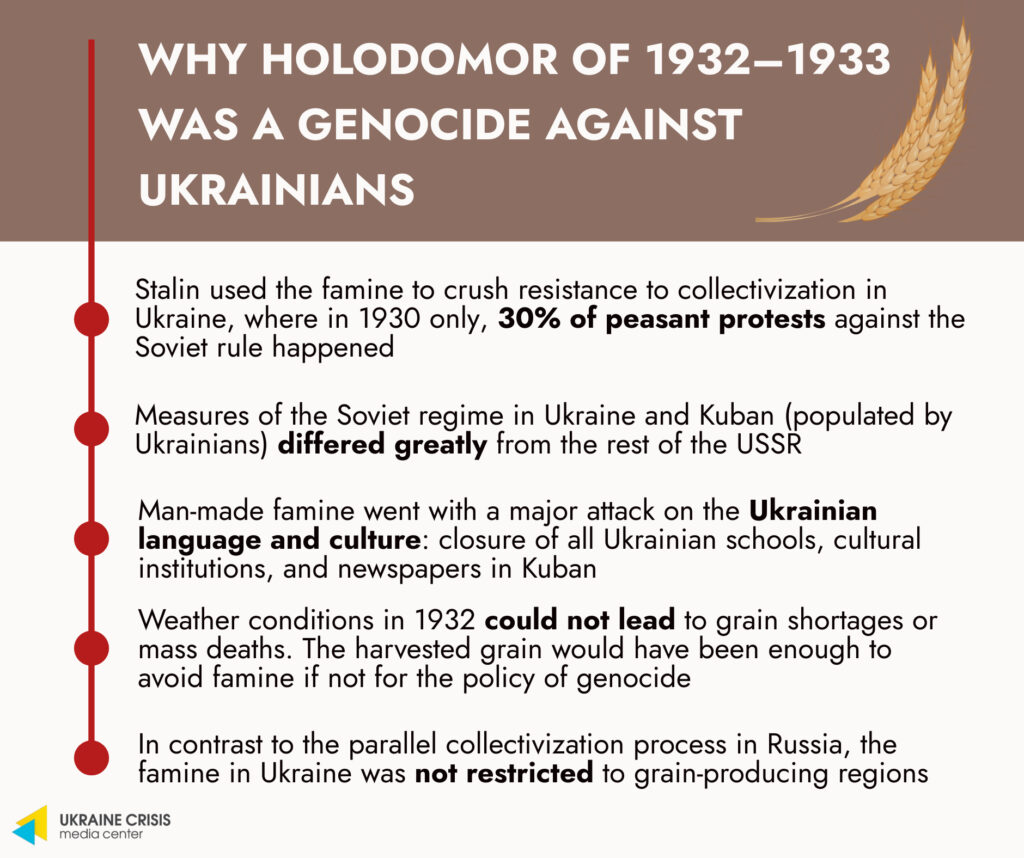
In the 20th century, the Soviet Union’s control over Ukraine grew especially brutal under Joseph Stalin. During the 1930s, Stalin’s forced collectivization policies triggered the Holodomor, a catastrophic famine that killed millions of Ukrainians. Even after World War II, Moscow maintained an iron grip on Ukraine, quashing dissent and any push for independence. But Ukraine’s spirit was unbreakable. The collapse of the Soviet Union in 1991 offered a glimmer of freedom, as Ukraine declared independence, breaking free from Moscow’s shadow—for a while, anyway.
Independence and Identity: Ukraine Looks West, Russia Looks On (1991-2013)
Post-independence, Ukraine emerged with dreams of democracy, independence, and economic growth. But freedom came with its own struggles. The nation faced corruption, economic hardship, and a tug-of-war between its east and west. Eastern Ukraine, with a large Russian-speaking population, held deep cultural and economic ties to Russia, while Western Ukraine leaned towards Europe, yearning to join the EU and NATO.

This east-west divide became a battleground for influence. Russia, still reeling from the Soviet Union’s collapse, viewed Ukraine’s independence as temporary. Moscow saw Ukraine as part of its sphere of influence—a “buffer” against the West. But Ukraine’s aspirations were different. This tension simmered until it reached a boiling point in 2013, during the Euromaidan protests.
Euromaidan and the Start of the Fire (2013-2014)

In November 2013, a spark lit the streets of Kyiv. Ukraine’s pro-Russian president, Viktor Yanukovych, abruptly rejected a trade deal with the EU, pivoting toward Moscow. For many Ukrainians, this was betrayal—proof that the country’s future was being pulled back into Russia’s orbit. Crowds flooded Maidan Square in Kyiv, waving EU flags, chanting for freedom, democracy, and independence from Moscow’s grip.
What began as a protest turned violent. Government forces cracked down, and by early 2014, dozens lay dead. But the Ukrainian people didn’t back down. In February 2014, Yanukovych fled, and Ukraine’s parliament removed him from office. A new government stepped in, one more aligned with Europe, but the message to Moscow was clear: Ukraine was moving West.
The Annexation of Crimea: Putin Strikes Back

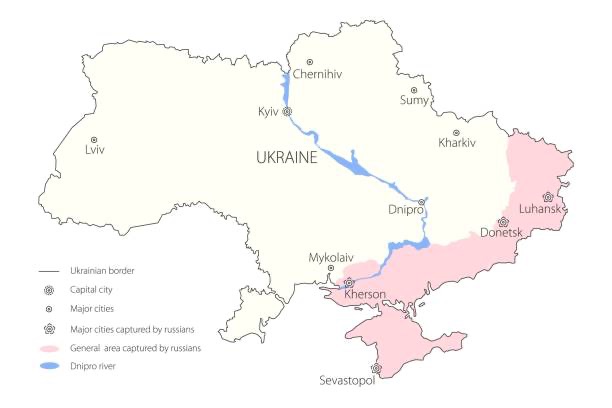
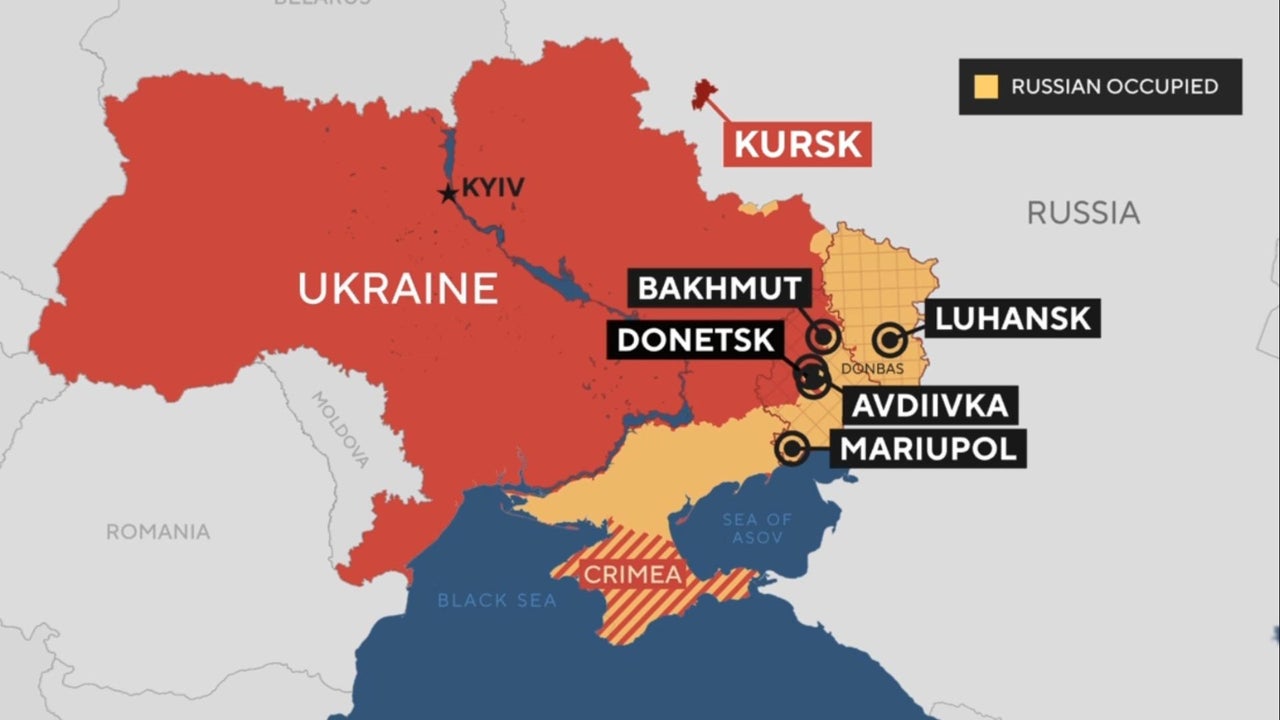
Russia’s response was swift and decisive. In March 2014, Russian forces, in unmarked uniforms, stormed Crimea, a Black Sea peninsula with a majority-Russian population and a critical Russian naval base. Within days, Crimea was effectively under Russian control, and a hastily organized referendum showed overwhelming support for joining Russia—though the vote was widely criticized as illegal and manipulated by Western leaders.
The world gasped. Russia had, by sheer force, redrawn borders in Europe for the first time since World War II. Western countries condemned the move and imposed sanctions, but Putin pressed on, justifying the takeover by claiming he was protecting ethnic Russians. Crimea was officially annexed, and Ukraine had lost one of its most strategically valuable regions.
The War in Donbas: The Conflict Becomes Bloodier (2014-2021)
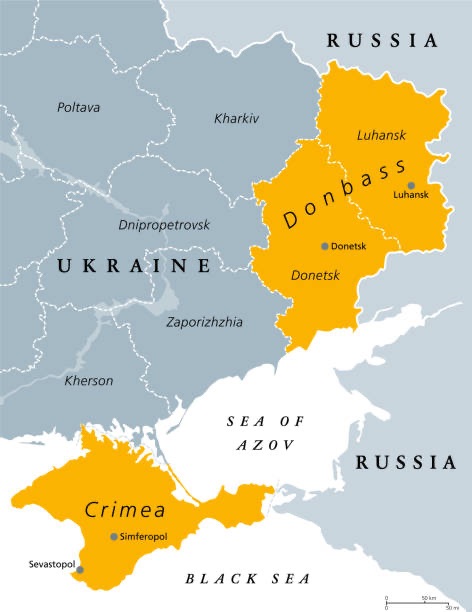
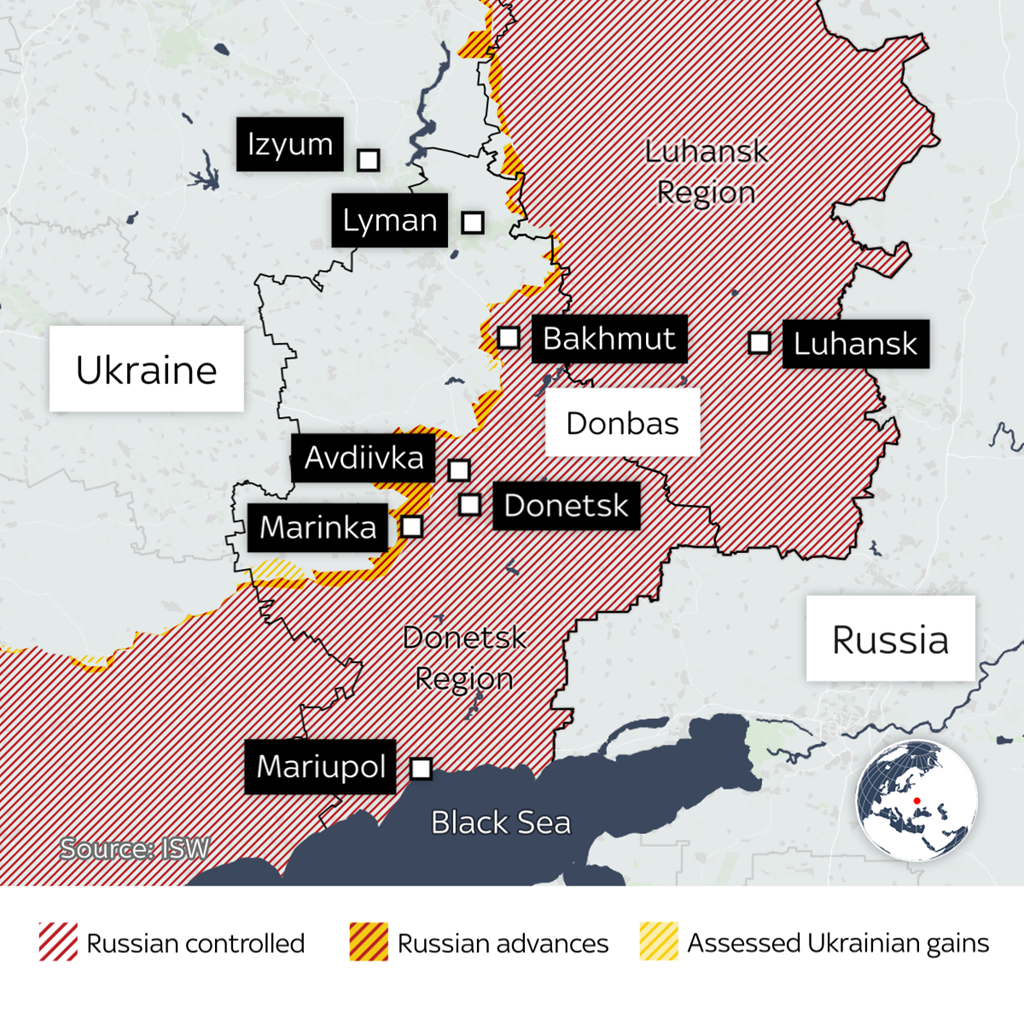
But Putin wasn’t done. In the spring of 2014, pro-Russian separatists in Ukraine’s eastern regions of Donetsk and Luhansk declared independence, sparking a brutal war between Ukrainian forces and separatist militias, which were backed, armed, and, in some cases, led by Russian operatives. As fighting escalated, towns and cities in eastern Ukraine were devastated. Civilians were caught in the crossfire, and what began as protests had turned into a full-blown insurgency.
Western nations responded with a new wave of sanctions against Russia, targeting its economy, its elites, and its energy sector. But in eastern Ukraine, where Russia provided covert support, the conflict dragged on, with neither side willing to back down. The area, known as Donbas, became a frozen conflict, one that would smolder, claim thousands of lives, and set the stage for the unthinkable—an invasion.
The 2022 Invasion: Russia’s Gamble and Ukraine’s Resistance
In the early hours of February 24, 2022, the world awoke to the thunder of Russian missiles raining down on Kyiv, Kharkiv, and other Ukrainian cities. After months of military buildup, diplomatic warnings, and Western leaders scrambling to de-escalate, Russia invaded. Putin called it a “special military operation,” but for Ukrainians, it was a full-scale war aimed at wiping out their independence. Russia’s goals? Swiftly decapitate Ukraine’s government, install a pro-Russian regime, and bring Ukraine firmly back under Moscow’s control.

But this wasn’t 2014. Ukraine was ready, and its people were unbreakable. With President Volodymyr Zelensky, a former comedian turned national hero, refusing to flee, Ukrainians took to the streets, armed themselves, and defended their towns, cities, and sovereignty with a ferocity that stunned the world. Russian tanks rolled into cities like Mariupol and Kherson, but faced fierce Ukrainian resistance, suffering unexpected losses as the conflict turned into a brutal war of attrition.
The World Reacts: Sanctions, Military Aid, and a New Cold War
The invasion sent shockwaves through Europe and beyond. Western nations responded with a torrent of sanctions, hitting Russia’s economy hard and isolating it from global financial systems. Energy giants like BP and Shell pulled out of Russian projects, and the EU, heavily reliant on Russian energy, scrambled to find alternatives.
But perhaps the biggest shift was NATO’s unprecedented support for Ukraine. The United States, European countries, and others sent billions of dollars in military aid, from anti-tank weapons to advanced drones. Countries that had long shied away from military alliances—like Sweden and Finland—lined up to join NATO, fearing they might be next on Putin’s list.
Russia’s economy, under the pressure of sanctions, buckled, yet Moscow pressed on. In the Kremlin, Putin seemed determined to ride out the consequences, casting this as a holy war against “Western decadence” and positioning Russia as a bulwark against Western influence. But for ordinary Russians, the consequences were severe: inflation soared, goods became scarce, and young men were sent off to a war they didn’t fully understand.
Life Under Fire: Ukraine’s Resilience, Russia’s Standoff
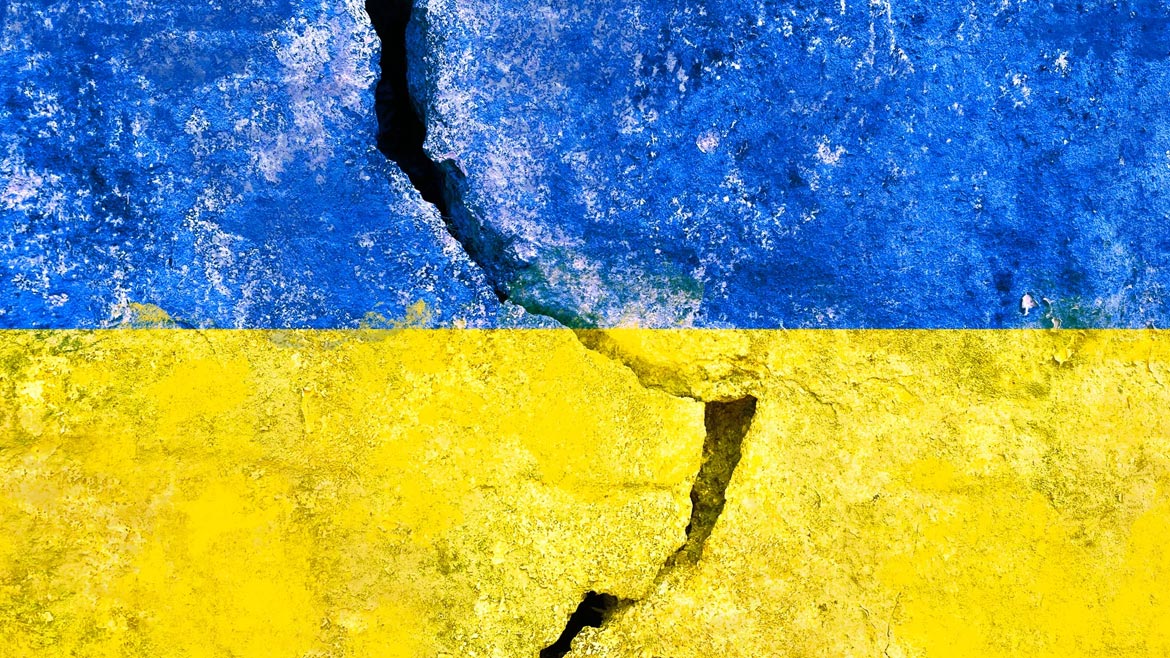
For Ukrainians, life under fire has become a daily reality. Families shelter in basements, cities ration power and water, and soldiers defend their homes with grit and courage. In cities like Kyiv, life carries on between air raids and missile strikes, with people going to work, children attending school online, and communities rallying to support each other. The West has praised Ukraine’s resilience as symbolic of freedom, a rallying cry for democracy against authoritarianism.
Russia, meanwhile, grapples with its own reality. Sanctions and battlefield losses have put strain on Moscow, and as body bags return home, Putin’s popularity among ordinary Russians has wavered. Despite state media’s iron grip on information, cracks have begun to show, with protests sparking in major cities and thousands of young Russians fleeing to avoid conscription.
Geopolitical Aftershocks: A World on Edge

The Ukraine-Russia conflict has transformed the global landscape. Europe has accelerated its pivot from Russian energy, reshaping global markets. NATO is stronger, but Europe is anxious, wondering if a miscalculation could trigger an even larger war. The U.S. has found itself recommitted to Europe, while China watches closely, assessing Western resolve and testing its own ambitions.
Russia has pivoted economically toward China, India, and other non-Western allies, reshaping alliances and challenging Western hegemony. For the first time in decades, the idea of a divided world—East versus West—isn’t just theoretical. The conflict has sparked fears of a new Cold War, one with battlegrounds both digital and physical, stretching from Ukraine’s fields to cyberspace.
The Path Ahead: A Conflict Without Clear End

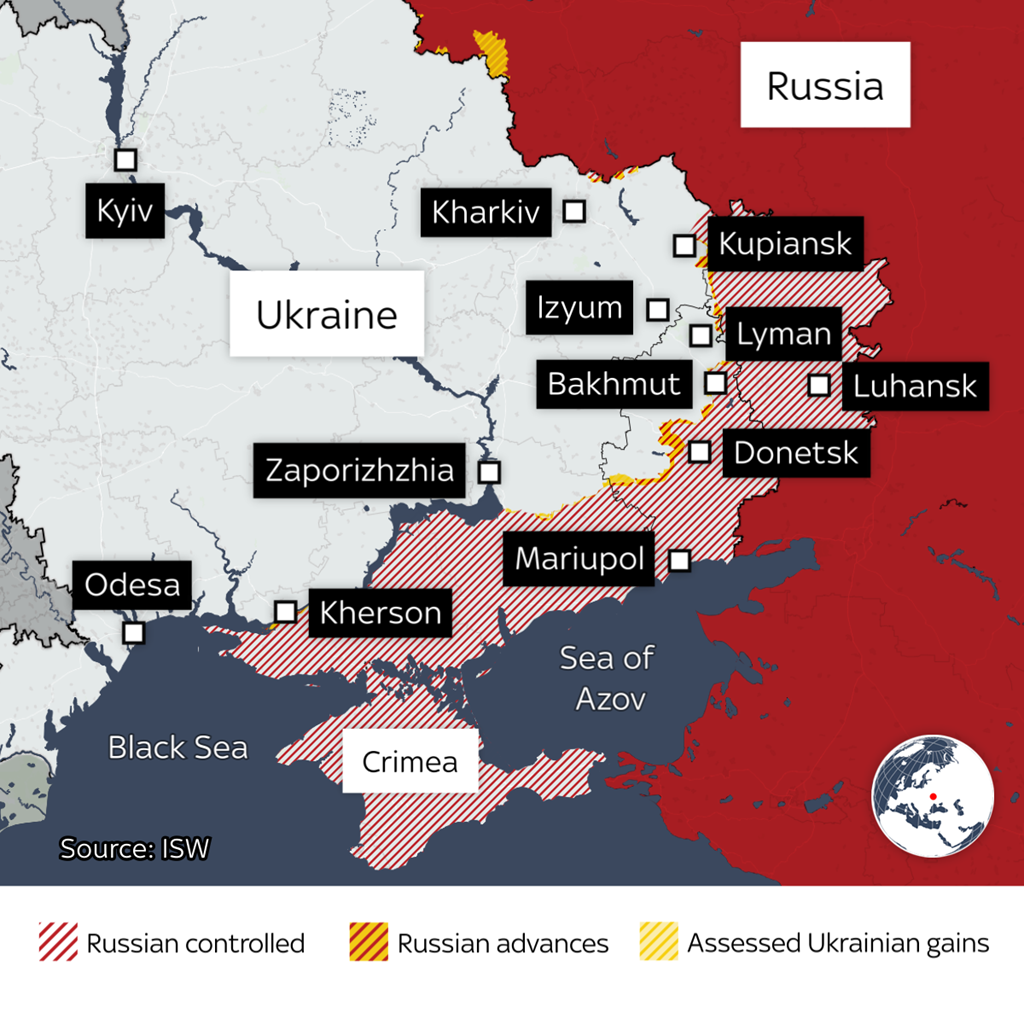
For now, the Ukraine-Russia war is in a deadly deadlock. Ukraine, bolstered by Western weapons and resolve, has clawed back territory but at a devastating cost. Russia, humiliated yet determined, clings to the Donbas, throwing more men and material into the fight. Diplomacy has stalled, as neither side shows signs of compromise.
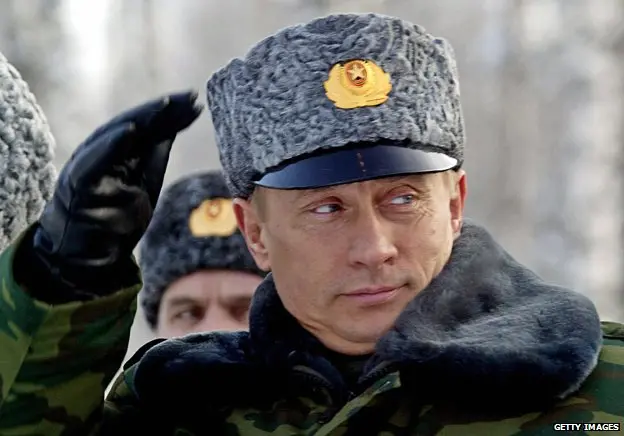
What will end this war? Some experts say only Putin’s exit from power could bring peace. Others believe Ukraine must liberate every inch of territory to secure its independence. For the world, there is a lingering fear that this war could escalate even further—a reminder of the dangerous unpredictability that marks our age.
Conclusion: Courage, Devastation, and a Question of Futures
The Ukraine-Russia conflict is a tragedy of our times, a clash of visions, power, and identity. As Ukrainian families brace for another winter under siege and Russian citizens quietly question their leader’s ambitions, the world watches with bated breath, hoping for peace yet fearing the future. This war is a brutal testament to what happens when power meets resistance, when dreams of empire crash into the unyielding spirit of a people fighting for survival.
In the end, Ukraine’s story is one of resilience in the face of annihilation, a defiance that inspires and devastates. And as the world sits on edge, the question remains: how long can these flames keep burning, and what will be left when they finally die down?
 Apocalypse Now Threedux: World War Thr33
Leave a comment